Showing posts with label Gleniffer. Show all posts

13.3.25

Explosive Growth of Secondary Roads from Industrial Logging

Forest loss - (Secondary) roads from industrial logging fragment ecosystems (ChatGPT)
New roads in forest frontiers enable secondary roads that amplify human impacts. Roads are key proximate drivers of environmental impacts, including forest fragmentation.

"Tropical forests face widespread environmental threats from road expansion. Previous research established that roads enable human incursion, break up ecosystems, and intensify deforestation through land clearing, fires, and illegal resource extraction. The role of secondary roads in amplifying these effects has remained poorly quantified, leading to gaps in environmental impact assessments and conservation strategies.
Environmental impact assessments failed to account for the full scale of road-induced deforestation. " (source)

"In the tropics and beyond, roads are key proximate drivers of environmental impacts, including forest fragmentation. These secondary roads in turn can dramatically elevate forest and biodiversity losses."

Jayden E. Engert et al, Explosive growth of secondary roads is linked to widespread tropical deforestation, Current Biology (2025). DOI: 10.1016/j.cub.2025.02.017

16.2.25

Social Acceleration in Bellingen/ Gleniffer Suburbia

After logging machinery has denuded the forest and ploughed up Gleniffer Rd. more fossil fuel monstrosities are widening the road again. This degraded landscape of Bellingen/ Geniffer now attracts high-speed burnouts with boomboxes.

This 'production of space' opened up the space for burning some tyres throughout the night. Far away from civilisation and enforcement the drivers are racing though the denuded koala habitat and residential areas.

It is futile to deliberate whether the suicides of young men are unintentional or intentional. The mobility infrastructure design demands automobility and speed. The active transport desert repels pedestrians and slow (e)mobility. The traffic jam spurs rage and violence.

Society demands the acceleration of the pace of life. Commercial combustion racing events encourage all petrolheads in petrotopia.

Driving always entails a latent ‘suicide risk' in this given system. The ‘integral accident’ is inherently woven into this mode of transport and technological acceleration. It is the 'collateral damage’ tolerated by all.

Mainstream media bombards us with ‘news’ of ‘accidents’. The overexposure to the daily slaughter on the roads leads to its normalisation. Only spectacles and superlatives can demand any attention now.

Daily reporting of a house that has 'collided' with a speeding car. A group of people without armouring that 'collided' with a flying car. Just another hit-and-run. Just another normal hit-and-run. A few walking school kids ploughed off the footpath while mounting the kerb. No road is ever wide enough or has enough bollards to protect living beings from these machine operators on autopilot mode.

The concepts of the all-terrain vehicle (ATV) and the 'Sports Utility Vehicle’ (SUV) destroyed all mental guardrails for the motorist. Roads became 'so yesterday'. The 4x4 combustion machine was liberated to conquer the rugged terrain (car ads) of all non road spaces. A mindscape of ‘without any limits’ was born.

This allocation of space/time means that humans and other animals now have to dodge these ubiquitous flying bullets. Living beings are literally out of a habitat, considering how many cars end up on top of their homes.

Cars doing burnouts at night are just a matter of degree to the ‘normal’ daytime traffic of a commercialised and heavily industrialised sub-urban Bellingen/Gleniffer area now.

Links:

Suicide or accident? The hidden complexities of intentional road crashes in Australia
https://theconversation.com/suicide-or-accident-the-hidden-complexities-of-intentional-road-crashes-in-australia-248673

The Original Accident, Paul Virilio, 2007
https://www.wiley.com/en-us/The+Original+Accident-p-9780745636146

12.9.24

Bellingen Koalas and Suburbia

After the logging and clear felling of Bellingen's forests, koalas find themselves wandering around homeless. Desperate to find suitable (private) land that has not been cleared, they have to cross an array of roads with speeding trucks and cars. Navigating this terrain they find that most '5 acre kingdoms' are sprouting monocultures of lawns and exotic weeds. The majority of local landowners keep introduced canines that keep their places wildlife free. Additionally, these pet owners walk their dogs unleashed through the 'bush' to be emptied. Delighted to spot a koala they take snapshots of the horrified marsupials clinging to a tree by the roadside. They are then tagged and spread around on proprietary platforms.

Data from the South-East Queensland Wildlife Hospital Network could be an indication about the main mechanisms that are making koalas in 'the wild' extinct. Although there is a sparsity of data for the Bellingen/Gleniffer area, one could assume similar trends for this area. Industrial logging of 'The Great Koala park' is a rapid disruption to all forest biodiversity. Unrestrained sprawling human settlements with their associated roads/cars and dogs are also making Australian species extinct.

"After European colonization in 1788, more species have become extinct in Australia than in any other country on Earth (Australian Government Department of Agriculture Water and the Environment, 2022)."

VEHICLES
The wildlife around Gleniffer Rd. and Roses Rd. have experienced a 'massacre' after the 'upgrades'  (for logging machinery and tourist access). Australian wildlife are smeared along the asphalt on a daily basis. The externality of this mobility form is called 'roadkill'.

When koalas are hit by motor vehicles they are predisposed to head trauma and fractures to the skull and jaw. "Koalas who had been attacked by a dog, fallen from a tree, and/or been hit by a motor vehicle were more likely to be euthanized or found deceased than released."

DOGS
For koalas, the main complications of a dog bite injury often include infection, torso fractures and zoonotic organisms carried by dogs. "Despite almost 50% of households in Australia having a pet dog, there is limited research on the human management of pet dog and wild koala interactions." The system is also lacking management strategies to prevent dog attacks on koalas.

This area has no wildlife hospital nearby and no data/ studies have been conducted on the impacts of sprawl ( logging, settlements, roads, cars and dogs).

In 2020, the NSW Parliamentary Inquiry into Koalas found that koalas will become extinct before 2050 with the present regime of 'business as usual'. First the thylacine, then the koala, then... 

Charalambous, R., Descovich, K. A., & Narayan, E. J. (2024). Identifying Trends in Admission and Release of Wild Koalas in Veterinary Clinics Throughout Queensland, Australia. Society & Animals (published online ahead of print 2024).  https://doi.org/10.1163/15685306-bja10220


Road and dog density contribute to the extinction of koalas

https://www.nature.com/articles/s41598-023-40827-w

Dissanayake, R.B., Stevenson, M., Astudillo, V.G. et al. Anthropogenic and environmental factors associated with koala deaths due to dog attacks and vehicle collisions in South-East Queensland, Australia, 2009–2013. Sci Rep 13, 14275 (2023).

26.2.24

A Master Plan for Bellingen Placemaking and its Surrounding Forests

Bellingen area stripped bare?

Bellingen council is in the process of producing a CBD Master Plan for Bellingen, Dorrigo and Urunga.  “A long-term vision and implementation strategy will be outlined for guiding growth and change in an area." The plan will be used to implement “ land use, building density, public spaces, mobility, sustainability, and heritage.”

These long-term 'visions' and actions will have implications for settlers, Indigenous peoples, visitors and more-than-human lifeforms. Stakeholders were asked to ‘share their ideas’ (consultation) with consultants and council. Biodiversity was rendered voiceless.

A strategy for growth (business as usual) and change (unspecified) ”will influence the future appearance, atmosphere, and functionality of the town centres”

Bellingen is a small town, located on the Mid North Coast of New South Wales. It has a long history of (rainforest) timber extraction. Like most other Australian sprawling towns it is (totally) fossil fuel/ car dependent. Users of the CBD obtain their stuff there and drive to their homes or short term accommodation. All roads are congested and constantly have to be rebuilt to accommodate the increasing traffic.

The idyllic scenery

A drive in the scenic countryside used to be a big drawcard for visitors and boosted the income for the service industry. The cruise past forest canopy from the coast to mountain rivers and waterfalls funneled money into town.

It is these surroundings, the ambient milieu, that gave the small town its charm. Showcasing its physical (rich biodiversity) or social settings (some non mainstream culture) put the place ‘on the map'. It is not a few shops, but the setting, the relational context that gives a 'thing' its value.

Stripped bare - Native forest governance

The NSW state government’s Forestry Corporation has made the decision now to log and clear-fell vast areas of forests surrounding the area before some are declared a Great Koala National Park. Bellingen/ Gleniffer is now surrounded and locked in by industrial forest logging sites for years.

The degradation and destruction of Bellingen’s 'frame' will have impacts on the “the future appearance, atmosphere, and functionality of the town centres.” 


The habitats of plants and animals are being stripped bare while timber is being extracted with the aid of fossil fuel machinery and tax dollars to subsidise these destructive projects. Untold living creatures lose their homes and are being pushed onto the newly updated logging roads to become 'roadkill'. Diverse and endemic remnant flora and fauna are wiped out to make way for a monoculture plantation with the aid of pesticides and lingering fires and smoke pollution.

Residents, visitors and businesses that have chosen this country location find themselves next to industrial sites with mega industrial machine pollution, eroded, dangerous extraction roads and stranded assets. This invasion disrupts and absorbs the lifetime of the residents and carers who are committed to refraining from degrading Australia any further.

The violent destruction of bulldozing ecosystems entails noise, dust clouds, pollution and expulsion. It is the offloading of the externalities, so that the native forests can be sent overseas in the form of wood chips. Voiceless nature undergoes 'dispersal'.

Forest logging robs Australian animals of food, shelter, and breeding areas and threatens their survival. Unique endemic plants and remnant vegetation ‘get under the wheels’ of logging machinery.

Even in 'normal times’ forest-dependent biodiversity is threatened by out of control land clearing, invasive species, cars, pets, pollution, disease and weather extremes due to climate disruption cause by burning fossils.

Native forest logging makes bushfires worse and renders bushfires harder to control. Out of control fires hasten ecosystem collapse.

Wipe out
The industrial extraction of the 'stuff' called timber is torn out of the heart of a complex web of life. The irretrievable evolutionary process of 3.7 billion of years which appears to us as imperceptibly slow motion is just wiped out.

Our present (perception) has an endless past incorporated in it. The bureaucrats/loggers are only able to see the thing called ‘wood' for export income and votes. With this mind frame an open future is foreclosed and the future takes on a necessary trajectory.

Land use vs Country care
Country was managed for 65.000 years (long-termism) with Indigenous knowledge systems of relationality and connectivity. Settler-colonial society encountered a 'pristine' environment. In a very short time of 236 years since European settlement the 'state of the environment' can be summed up as one of degradation and extinction. "More than half of NSW forests were lost since 1750 and logging ‘locking in’ species extinction". (source)

“Our inability to adequately manage pressures will continue to result in species extinctions and deteriorating ecosystem condition, which are reducing the environmental capital on which current and future economies depend. Social, environmental and economic impacts are already apparent.” (source)

The entire Australian environment is deteriorating due to pressures from rapid resource extraction and expansion, climate disruption, habitat destruction, invasive species and pollution.

To squander one’s own environmental capital is maladaptive behaviour, that prevents one from making adjustments that are in one’s own best interest. To destroy the basis of existence is suicidal, unless there is more ‘new found land’ or another planet waiting around the corner.

The speed of exploitation and its associated expansion in spacetime are escalated by the ubiquitous economic dictates. It is an out of control system without functioning guardrails.

“That things are "status quo" is the catastrophe.”
― Walter Benjamin, The Arcades Project


Polycrisis

Ruthless extraction and degradation of one's own existential basis is taking place in the context of an emerging polycrisis, the simultaneous occurrence of several catastrophic events.

Global warming from fossil fuels, putting the chain saw to the tree of life (biodiversity) and pollution of the biosphere are just a few of the intersecting global environmental crises of the collective impacts of one species.

The ongoing ecological depletion on local, regional, and global scales, is seen as normal. The next generations of living entities will just have to deal with this ‘shifting baseline’ of a scorched, barren Earth, devoid of any life as far as the eye can see.

This project is threatening the fabric of complex life on Earth. A 'long-term vision' of a 'master plan', even of a local area, must take the existential risks to humanity and life into account.

It is essential to invoke the precautionary principle to do no social harm and environmental damage in the light of an avalanche of scientific reports and pledges.

Growth, intensification of extraction and expansion of living space constitute the script and the mental landscape of the settler.


The 'superior land use' argument has been used to justify the genocidal violence and ecocide of the colonised diversity of life, replacing it with a monoculture of livestock, plantation crops and pets.

The “logic of elimination”, (Patrick Wolfe, 2006) of the expanding colonial scheme goes hand in hand with the denial of existence (e.g. Indigenous peoples, referendum, forest surveys, data sparsity etc) and imperial governmentality.

The state of the planet demands attention and care. A facing up to the unsettling 'long present' of denial. Ending the undisturbed slumber of collective amnesia.

“Australians haven’t actually started living on this continent like they are from here and they have a responsibility of custodianship.” Richard Swain

As we are sliding into creeping collapse at an accelerated speed the presuppositions of the global governance of the biosphere have to be interrogated to produce strategies of bare survival possible in a post-democratic society where regulatory capture is the norm.

The council, Bellingen Chamber of Commerce, the tourism industry, the short stay lobby and all the other ‘stakeholders’ could position themselves to keep Bellingen’s ecosystems in a healthy state. Eradicating forests around Bellingen/ Gleniffer will not foster place identity.

Bellingen placemaking without the buffer of healthy forests and ecosystems would just be another bare drive-though town ‘in the middle of nowhere'.

"First life, then spaces, then buildings – the other way around never works” Jan Gehl


Links:

M.Ward et al., 2023, The impacts of contemporary logging after 250 years of deforestation and degradation on forest-dependent threatened species
DOI:10.1101/2023.02.22.529603

Patrick Miner et al., 2024, Car harm: A global review of automobility's harm to people and the environment, Journal of Transport Geography, Volume 115, February 2024
 

Patrick Wolfe, 2006, Settler colonialism and the elimination of the native, Journal of Genocide Research Volume 8, 2006 - Issue 4

21.10.23

The Existence of Koalas

 
Can data gathering and the courts save the koala and biodiversity from clear felling?

The koala is an endangered species that is predicted to become functionally extinct in NSW by 2050. The NSW government plans to create The Great Koala National Park, which includes publicly-owned state forests, to halt the extinction trajectory of the marsupial. At the same time the government owned state Forestry Corporation of NSW on the Mid North Coast is planning and actively clear-felling the habitat of this endemic species.

One of the first actions for the 'world leader in mammal extinctions' would have to be to refrain from 'business as usual'. The prime reason for the marsupial's demise is the destruction of its habitat through land clearing, deforestation, logging and rapid urbanisation. The associated road designs, car crashes, mauling by roaming pet dogs shrink and degrade the already fragmented habitat even further. Fossil fuel fanned bushfires further cause death and injuries.

Ecological data is essential for the understanding and the protection of species. The quantification and simplification of ecological complexity can inform decision-makers in government and law to ensure the resilience of ecosystems and genetic diversity.

To establish the existence, distribution and population size of an endangered animal, an array of spotting and monitoring techniques are available. Wildlife monitoring can take the form of spotlighting with 'boots on the ground', searching for koala sightings (image capture), sound (recordings) or scat surveys (poo) collecting around dawn and dusk. Passionate non-expert citizen scientists and consultancy services are involved in this biodiversity data gathering and database collating. Due to resource constraints, data gathering tends to get outsourced to technological techniques that require it to be cost-effective and rapid. The monitoring methods need to be reliable and cause the least harm to wildlife and its ecosystem. Good ethical practice should prevent the risk of unintended consequences.

“Boots on the ground” and spotting koalas in food trees in the daytime is one way. Images (GIS) and searching for scat (poo) is a daytime activity. Nocturnal animals can be spotlighted at night and sound recording can be made. Marsupials can be sensitive to any human disturbance.

Motion sensor high-resolution camera traps can be installed or drones fitted with infrared cameras that buzz an area in a 'lawnmower' pattern to capture the free roaming animals. Sound encroachment by the UAVs tends to cause stress in wildlife.

To fit radio-collars on koalas can be invasive to the animals due to handling.

One of the presently favoured local methods is scent detection by sniffer dogs. Fresh scat can also be used for genetic testing of populations in fragmented habitats. Wildlife perceives introduced dogs as predators leading to stress and negative impacts. Pet dogs will leave their scent in the bush which in turn disrupts the normal cycles of wildlife. Some endemic animals can avoid the area altogether after the presence of dogs.

One less invasive monitoring method of wildlife seems to be bio-acoustics. Soundscape monitoring can detect koala bellows continuously between 8pm and 2am. Low-cost, open source recorders can be used in microphone arrays. Computer algorithms can rapidly analyse thousands of hours of audio recordings to identify specific species' occurrences. Collating the data could also be done with open software under creative commons. Biophony approaches go beyond the 'decontextualized single-species model'.

AudioMoth is such a low-cost acoustic device for monitoring biodiversity. It comes as a small recorder about the size of a credit card and has ‘hearing’ up to 190 kHz.

The urgent need to establish the existence of Australian flora and fauna through expert consultants and their technology is in the light of the continuous assault on Country.

The gathering and collating of this data verifying the existence of ecosystems has the potential to be instrumental in halting the extinction trajectory of biodiversity.

Australia is built on the imaginary foundation of 'terra nullius', an 'empty' land without Indigenous peoples. Today, the 'blind spot' takes the form of an absence or manufactured sparsity of data on Australian native plants and wildlife and justifies the continuous defaunation and eradication of endemic flora.

The sheer existence of threatened species and biodiversity conservation laws appear as an obstacle to the 'business as usual' modus. Extractivism and the financialisation of nature continue to drive the Australian ecosystems into degradation and extinctions.

Reports by scientists and data by citizen scientists are often disregarded. A huge PR industry greenwashes the central issues with 'glossy papers' and 'raises awareness' in the mainstream media channels. A busy and stressed out public is in willful ignorance about the existential issues of their home.

The 'democratic debate' of a concerned public is now replaced by pre-framed issues that have migrated from the arena of political participation into the court rooms. The dialogues of controversial political processes have been shifted from the political arena into the courts (expensive and time consuming litigation). The new terrain for dispute resolution is no longer based on a democratic participatory process, but it is confined to the legal system.

"Ultimately, peaceful political protest should be addressed by politicians. The current government has decided, by making disruption of ‘everyday life’ a criminal act, that it is a matter not of politics but for the police and criminal law. This will have serious implications for society, and for freedom of speech, whether or not you believe it is the right approach."
(source)

In this milieu political protest is forced to take the form of civil disobedience and is viewed as yet another disruption to the flow of a perfect global supply chain. Criminal law takes care of the 'spanners in the works'. It is the criminalisation of voicing dissent to a catastrophic normality.

The actors involved in this sphere are lawyers, judges and (private) ecological consultants. The public has the freedom to participate in this system via user-pays access. There, the experts deliberate about the more-than-human world and its human advocates. The ecology of this social subsystem of environmental justice is made up of ecological justice and social justice.

Constitutional law and courts have to ensure that justice is done towards the past, the present and a future. The process must ensure intergenerational equity, the rights of nature and compliance with international agreements. An array of national law/s written in the past might not be able to take account of the global poly-crisis the planet is facing today.

When human 'developments' replace other species, custodians and their institutions have to decide whether that being exists at all or will be granted the right to continue to exist at all.

Expertise is manufactured by scientists in their field, the validity is established by a community of practice and the law of the time. 500 years of global extractivism history and neo-extractivism have established a clear value system and mindsets of what are the priorities of settler societies.

Under the Myanmar military junta or Amazonian right wing governments for example, the rich and unique biodiverse rainforests of their countries cease to exist and are then transformed into simple timber, crops and cash for a few. Justifying the unjustifiable becomes superfluous.

In the west, the market steers the curating of ecological data and the decision making into the hands of external consultants that are expected to provide accurate and valid data to the courts. Third-party consultants can 'cut corners' and resort to rapid surveys and 'box checking' of bio-diverse assemblages. Problems of reliability and validity remain. Western science is the knowledge system of that very system.

In a recent reproducibility trial for example 246 biologists got widely divergent results from the same data sets. (source)

James J.A.Blair  argues that the 

“practices of accountability prioritize mining interests and enable corporations to define the standards of performance that governments will use to establish compliance”

"In the late petro-capitalist normative order, private purchasing power for short-term profit gains continues to capture data infrastructure and yield influence over public resource management...."

"Environmental “sensing practices” may serve diverse political goals and objectives for humans and more-than-human subjects..., but their ethical and social origins lie in imperial hunting, domestication and policing, rather than principles of reciprocity common to Indigenous hunting and trapping." (source)

It is said that the essential feature of capitalism is the profit motive. The destruction of native forests by the state forest corporation has to be subsidised by the taxpayers. “Over 90% of native forest that is logged in NSW is pulped and sent overseas to be used in wood chips... “ (source)

As an economic project this rationality can only be explained by short-term political gains. Would decision-makers sacrifice a highly interrelated pattern and processes of flora, fauna and ecosystems? Would they exchange highly valuable, irretrievable, unique life forms for a quick 'multiplier effect'?

Could it be that the decision makers sacrifice native forests, (‘collateral damage’) plants and animals to keep a few timber workers and fossil fuel machinery owners in work for just another while longer?

60+ % of settler society recently confirmed a clear 'NO' to the existence and participation of the Indigenous peoples in this country. Australian endemic animals and plants are still largely unknown and can hardly be named by the general public. (Knowledge of the living', Canguilhem) Numerous reports attest to the degradation of the living in settler Australia.

The state of the environment on this continent has been ‘going in the wrong direction’ (Dr Ken Henry) for the last 235 years. (source)

The denial and lack of care for Country in mind, on paper and 'out there' is overwhelming. Only by refusing to acknowledge the existence of Country can the continuing destruction be rationalised.


Links:

AudioMoth: A low-cost acoustic device for monitoring biodiversity and the environment
https://www.sciencedirect.com/science/article/pii/S2468067219300306

Audio similarity search on the Australian Acoustic Observatory media archive. Users can upload audio recordings of an animal species, find similar sounds across the database, filter by location and date, and download the results. Open Source
https://search.acousticobservatory.org/

 
Four-legged friend or foe? Dog walking displaces native birds from natural areas
https://www.researchgate.net/publication/6055768_Four-legged_friend_or_foe_Dog_walking_displaces_native_birds_from_natural_areas

 
(In) tolerance to Civil Disobedience in the UK
https://verfassungsblog.de/civil-disobedience-in-the-uk/

Reproducibility trial: 246 biologists get different results from same data sets
https://www.nature.com/articles/d41586-023-03177-1

Salvaging Empire: Sovereignty, Natural Resources, and Environmental Science in the South Atlantic, James J. A. Blair, 2023 

https://www.jstor.org/stable/10.7591/j.ctv2zmkbzx?typeAccessWorkflow=login

https://www.cornellpress.cornell.edu/book/9781501771545/salvaging-empire/#bookTabs=1

 
Tracking penguins, sensing petroleum: “Data gaps” and the politics of marine ecology in the South Atlantic
https://www.jstor.org/stable/10.7591/j.ctv2zmkbzx?typeAccessWorkflow=login

Worth more standing: As NSW’s debt mounts, NCC calls for an end to subsidies for the logging industry.
https://www.nature.org.au/as_nsw_s_debt_mounts_ncc_calls_for_an_end_to_subsidies_for_the_logging_industry

Australia’s environment must be given legal priority over land-clearing and logging to survive, Ken Henry says
https://www.theguardian.com/environment/2023/aug/25/dr-ken-henry-environment-land-clearing-logging

Updates:

What is the admissibility of expert versus citizen evidence in court? Illawarra housing developer denies presence of platypus despite 'citizen science'. Outraged by the developer's refusal to acknowledge the animal's existence.
https://mastodon.au/@Bellingen/111411065583426641 

Outsourcing koala monitoring to AI (soundscape) sensors, at Western Sydney University, 4.12.2023
https://www.abc.net.au/news/2023-12-04/biodiversity-monitoring-services-ai-track-male-koala-mating-call/103183972

1.9.19

Gleniffer quilts - a cover for the bed and a landscape cover

Sandy Corry quilt
Another Gleniffer Quilt and Craft Fair took place in Gleniffer Hall. A large array of quilts was on display. The star of the show was the 'quilting queen' wearing her diamond tiara and demonstrating her 'doodling' on the sewing machine. Sandy Corry's work has a very haptic quality. Here are some of her pieces:
Click to enlarge pictures

Meat on the BBQ and the car park was full. Years ago the non-quilting crafts had a greater representation. A gang of unregistered trail-bikes demanded attention and disrupted the peace, as it is common in this area.

S.Corry quilt

The landscape cover setting
The Never Never Creek flows behind the Gleniffer Hall and a very small church. The gardens of the buildings 'reject the local environment' like most Australian gardens do. Lichen covered fences frame foreign grasses, known as lawns. A patchwork of Chinese camellia plants were planted in all colours from pink to red. The Japanese azaleas keep to this popular colour scheme too, a comforter landscape. An agave from central Mexico is tended to in a flower pot.


Outside the 'cage', trees drip with epiphytes. Tongue orchids (Dockrillia linguiformis) crawl along branches and pencil orchids (Dendrobium schoeninum) fall like stiff sticks from the tree. Shade!

Nearby stands a very large and lonely red cedar (Toona ciliata). A host for aerophytes and fauna. Did the cedar industry overlook this 'red gold'? Soon after European arrival the cedar forests lining all major rivers were eliminated by an extractive colonial industry. Cedar getter gangs stripped their way from Sydney through all rivers, right up to Queensland.
"An entire species of tree was just about wiped out on the NSW coast during the first 100 years of settlement." (source
The cutters would float the 'filet' pieces down the rivers to go to merchants in Sydney or England. The indiscriminate removal of the timber made way for the settlers/ pastoralists.


Most texts (pdf) of the 'In Search of Red Gold' stress the pioneering spirit of the frontier mentality in a people-free El Dorado. The First Nation Peoples, in this case the Gumbaynggirr of the Billengen River are invisible in the narratives.

15.2.19

The Bellinger River Snapping Turtles déjà vu


The Bellinger River Snapping Turtles were almost wiped out in 2015. What is the state of health of their home catchment today ?

"Water quality testing on the Bellinger, Kalang and Never Never Rivers earlier in January found elevated phosphate and low levels of dissolved oxygen at 9 out of 15 sites.

A combination of low rainfall, hot weather and nutrient run-off from fertilizers and animal waste (including humans).

The Australian standard is for available phosphate levels to be under 0.06mg/L but water testing near Gleniffer Hall on Tuesday revealed current levels are 0.37mg/L, which is six times higher." (Post-holiday season 'tourist drive' without toilets?)

Riverwatch testing finds high phosphate levels, The Bellingen Shire Courier-Sun, 14.02.2019
Bellinger Landcare Inc

Image:
Adolf Von Hildebrand, Boy drinking, 1870/1873

29.8.15

The Gleniffer Quilt and Craft Fair 2015

"Nature uses only the longest threads to weave her patterns, so that each small piece of her fabric reveals the organization of the entire tapestry.” Richard Feynman

The Quilt and Craft Fair was on again in the Gleniffer community Hall near the Never Never River. Here are some impressions of the works:

Click images to enlarge

Images:
Crochet west, via Dorrigo?
Lichen (Usnea sp.) on fence post near the Never Never River
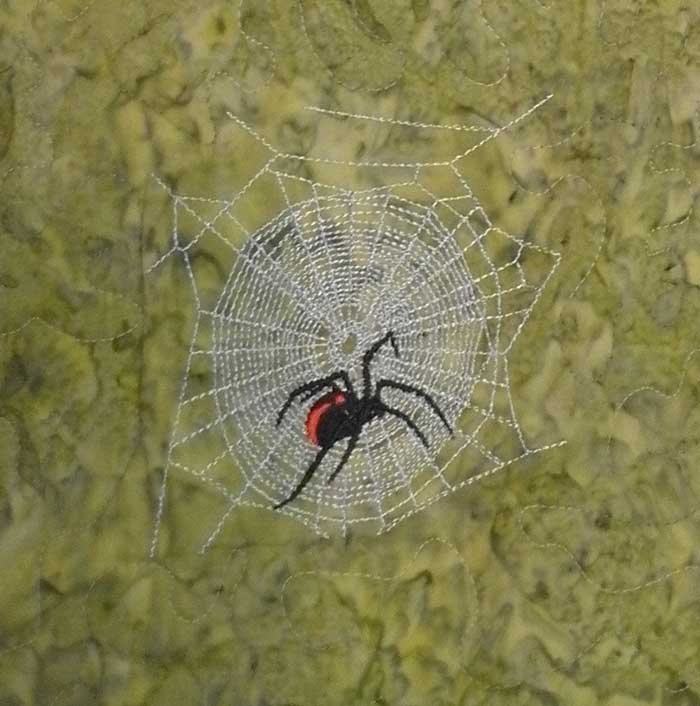
Detail of quilt: Redback spider
Rug with circular design
Rug from the recycled seams of jeans
Detail of Rug from the seams of jeans
Rug from rags
Detail from floral/geometric quilt
Detail of quilt: Dingo and black swans
Detail of quilt: Emu
Gleniffer Church window with a hint of Toona ciliata


The Gleniffer Quilt and Craft Fair 2013

14.9.13

The Gleniffer Quilt and Craft Fair

Quilting, beading, fabric dying and rug making in the Gleniffer Hall
For 2015 see here