Showing posts with label fires. Show all posts

11.7.24

An Environmental History of the Timber Industry: The Social Constructions of Forest and Identity

Some remarks on the Social Constructions of Forest and Identity: An Environmental History of Timber Industry Authorities in the Forests of Southeast Victoria, Australia,  Claire Waddell-Wood, La Trobe University, Victoria, 2024 (source)


One wonders why the degradation of Australia seems unstoppable.
Why are the forests and biodiversity being wiped out, eradicating a future for complex living beings?
What is the nexus between settler society and the extractive relationship to their surrounding country?


Claire Waddell-Wood, is an environmental historian who investigates the Victorian timber industry. Light is thrown on the extractive relationships of settler-colonial interactions with the landscapes they colonise. The conceptual framing foregrounds resource extraction/forestry labour and masculinity constructions against the background of a more-than-human world. 


The metabolism between European modes of production/ consumption took the form of “rape and pillage disasters.”  The resulting ecological crisis does not only take place in the timber industry alone, but is a way of life and work in all the extractive industries.


Victoria officially ceased logging operations recently. But in other states such as NSW (The proposed Great Koala Park) forests and their remaining biodiversity are still being denuded and erased. Elsewhere in the Big Quarry, “dualistic ontologies still guide human behaviour.” 

An acknowledgment and a change of ways of the mainstream structures, institutions and mindsets, as well as in environmental movements could harbour the possibilities for a fundamental transition of socio-ecological relations.


The ‘history of degradation’ traces the (southeast Victorian) forest industry’s  extractive work, masculinities and landscape degradation. p. 202


A “deep time forest culture (which) shaped and was shaped by long histories of interactions” (by Wurundjeri, Boonwurrung, Taungurung, Gunnai Kurnai, Jaitmatang, Bidwell, and Ngarigo people) encountered male dominated European settler culture that conceptualises “those forests through the resource imaginary”.

“The social metabolisms of invasion clashed with deep time forest cultures, and ecosystems became disturbed and damaged. The interactions between settlers and forests led to the escalation of fire frequency in forests.” p. 200


European agricultural ideals of plantation monocultures and short term crop yields constitutes a violent othering of Nature. Ancient Indigenous knowledges about forest ecology and ‘the region’s deep time fire culture’ were ignored. The result were intensified extraction and megafires.


From now on “the only true forest knowledge-holders were those trained in the forestry sciences.”  A move from bare rural masculinity in primary industries with boots on the ground to a ‘technoscience of colonial forestry’ operated at arms length via assemblages of machinery and from a top floor of a distant city.

The administration of the ‘stuff’ becomes ‘spatially alienated from the forests’. Hierarchies of (male) staff control the ‘output’ of the biophysical forest factory. Forestry and science experts with exclusionary language and procedures take control from head office over the landscape. Here “the construction masculinity through work” and the production of “wasted landscape" and “waste peoples” takes place.  p.197 


Waddell-Wood's thesis “can aid in untangling the myths of capitalism and colonialism from our everyday lives and help us to live with the biophysical world rather than against it.” p 203

Yet another stepping stone on the path to truth telling.

23.2.16

The hills around Bellingen could burn for a year...


NSW Forestry Corporation will log, bulldoze and burn Tarkeeth State Forest. “Residents have been told by Forestry Corporation that waste vegetation would be bulldozed into windrows and burnt over a period of a year or more...Imagine the smoke pollution right across the Valley." (source)

Study indicates 'biomass burning' may play larger role in climate change than previously realized. "Based on aircraft observations, satellite data and models, the findings indicate 'biomass burning' may need to be addressed with future regulations. Following closely after COP21, the results could suggest a need to look at other sources of greenhouse gas emissions, in addition to industrial activities and fossil fuel combustion in industrialized nations." (source)

Smoke - "Globally around 340,000 deaths per year are thought to be attributable to the additional pollution from landscape fires. Ending deforestation by burning would have many benefits, not only for global climate and biodiversity but for human health too." (source)

Measuring air quality/ NSW clean air legislation EPA NSW

Smoke and dust sensors. Open source technology for citizens:
Low-cost sensors to measure air quality. Monitor the air you breathe. Nature 09.01.2015


Links:
The hills around Bellingen could 'burn for a year', Bellingen Courier, 22.02.2016

University of Maryland. "Fires burning in Africa, Asia cause high ozone in tropical Pacific: Study indicates 'biomass burning' may play larger role in climate change than previously realized." ScienceDaily, 13.01.2016. 

World Pollutionwatch: Wildfires can kill – far from the flames, Guardian, 31.08.2015

 Hazard reduction burning kills 

Updates:
Tracking forest degradation regarding carbon emissions. Amazon Satellite alerts track deforestation in real time, nature 23.02.2016 

How Forest Loss Is Leading To a Rise in Human Disease, Yale Environment 360, 23.02.2016

Land-clearing surge in Queensland set to wipe out Direct Action gains – report Guardian 29.02.2016

'Like a scene from a doomsday sci-fi movie': Flames burn through Tarkeeth Forest, Bellingen Courier, 24.04.2017

Image:
Eugene von Guérard, Bush fire between Mount Elephant and Timboon, 1857

14.2.16

The Control of Fire by Birds


Early humans are seen as inventors of fire technology. Now birds of prey such as the the Brown Falcon (Falco berigora) and the Black Kite (Milvus migrans) join the list of those propagating fires deliberately in the Australian savanna woodlands.

Many birds benefit from anthropogenic fires or lightning fires, but narratives of ornithogenic fires have for a long time survived in legends and ceremony in many places around the world.
"Fire provides the opportunity for pyrophilic behaviour by some birds. Brown Falcons, Falco berigora, perch at the fire-front waiting for grasshoppers, frogs, snakes, lizards and small mammals.

Local Aboriginal people believe that Black Kites set fires by carrying burning sticks to new locations and drop them into dry grass on unburnt grounds...I have seen a hawk pick up a smouldering stick in its claws and drop it in a fresh patch of dry grass half a mile away, then wait with its mates for the mad exodus of scorched and frightened rodents and reptiles.

“When that area was burnt out the process was repeated elsewhere. We call these fires Jarulan.”

There is an extensive body of recorded material – some over 100 years old – of Aboriginal myths and legends relating to birds and fire from across Australia." (Source)
 
Sources:
Ornithogenic Fire: Raptors as Propagators of Fire in the Australian Savanna, Bob Gosford, Crikey
Ethnoornithology focuses on the intersection of birds & human cultural diversity.


Image:
Kalila and Dimna, The Fables of BidpaiThe owls are burned to death by the crows. Syrian unknown master, 1310.
- The animal fables Panchatantra were originally composed in Sanskrit around the 3rd century BCE
- Ramsay Wood believes that these fables provide one of the earliest secular examples of what Lawrence Lessig calls Remix Culture.

17.1.15

2014 Earth's warmest year on record - but we are air conditioned


"The globally averaged temperature over land and ocean surfaces for 2014 was the highest among all years since record keeping began in 1880." The National Oceanic and Atmospheric Administration and NASA
Coal powered air conditioners rattle through suburbia, shops and malls. All doors are wide open to invite possible customers in. People and pets are advised to stay indoors in the land of the great outdoors.  Livestock are precooked on treeless paddocks. Wildlife will have to manage somehow. The media disseminates images of beaches with jolly beach bodies cooling down before racing back to their ac suv to carry them to the next cool location.

Houses seem to be built for another geographical region, but not Australia.  After 100s of years they have not come to terms with the climate, let alone unhinged catastrophic climate change.

" ..You see the same housing design from Hobart to Emerald to even Darwin, and that's madness... Australia's houses are poorly adapted to extremes of temperature. Houses with little shade, green space or surrounding trees, and with dark roofs and low ceilings, mean that the only way to cool them is to turn on the air-conditioning", Dr Hanna, Ecomagazine

Whatever the seemingly temporary dwelling is, just bang a legionnaires disease dripping air conditioner on it and 'she'll be right'. Should there be a blackout it is always handy to blame possum for dark malls and melting businesses where nothing goes without electronic gadgets.

Stay cool Bellingen
"Historically in Australia, more people die from heatwaves than they do from any other type of natural disaster," Professor Steffen
Leaving the habitable planet option behind, out of control fires rage over the country. While the climate is "getting out of control", Australia chooses to stick its head into the hot beach sand and tolerate the increasing emissions of greenhouse gases.


 "About 10 per cent of fires are lit by children." Dr Janet Stanley, Monash University, abc


Images:
'Stay cool' Bellingen CBD, where local motorists turn the park into a car park
Blackout, eu

Heatwaves, blackouts and infrastructure breakdown, CSIRO
Hot and bothered: our health under climate change, ECOS
Urban areas see more heat waves, environmental research web


More readings on the 'life style' of bankruptcy
Henry Miller, The Air-Conditioned Nightmare, 1945

16.7.14

Hazard reduction burning kills

Particle matter pollution (PM2.5 & PM10) from 'unavoidable' burning is killing and hospitalising people every year. All beings that breathe are affected but those who are vulnerable, such as children, the elderly and sick people are more affected. Not only do they kill people who are already not in perfect adult health but they also cause illnesses including coughs, asthma and other lung conditions. They may also trigger heart attacks.

"Particles smaller than 10 micrometres (µm) in diameter (PM10) are consistently associated with increased mortality and hospital admissions for people with both heart and lung disease."

"Because of their smaller size, these particles can be inhaled more deeply into the lungs where the irritation can cause coughs, asthma and other lung conditions. Some are small enough to pass into the bloodstream through the finest blood vessels of the lungs where they can trigger heart attacks in people with existing lung or heart conditions and impact more severely on children and the elderly."
Harmful ozone causing further respiratory damage is also promoted by burning. "Hazard reduction burns are potentially significant sources of ozone precursors".

"Emissions from human activities are sufficient to cause regular exceedances of the AAQ NEPM standards."

When compared, it would appear that hazard reduction burning is more dangerous to human life than bushfires are, but that bushfires are more hazardous to property. Especially heap fires which are not 'unavoidable' could immediately be stopped to protect the air quality in rural areas. But perhaps hazard reduction burning might also be minimised to save lives with property as collateral.


Source:
http://www.epa.nsw.gov.au/soe/soe2012/chapter2/chp_2.1.htm#2.1.9

More on the rendering of large parts of the earth uninhabitable:
Many fires in New South Wales, Australia, NASA's Aqua satellite, July 11

Hazard reduction in Bongil Bongil National Park.

Local residents welcome new vegetation clearing laws with open arms.

Scientists show a drier Australia is primarily caused by greenhouse gases, thinning in ozone layer

Rainfall decline in south-west Australia linked to climate change 


Updates:
Mark Z. Jacobson. Effects of biomass burning on climate, accounting for heat and moisture fluxes, black and brown carbon, and cloud absorption effects. Journal of Geophysical Research: Atmospheres, 2014; DOI: 10.1002/2014JD021861

Sydneysiders choking on the air they breathe, SMH 082014

Hazard Reduction burns rescheduled due to health warnings about smoke, rfs. NSW, 0814

Increased air pollution from bushfires is among the rising threats facing NSW residents as global warming makes blazes more likely, according to a new report by the Climate Council. SMH 1014

Smoke from agricultural land-clearing fires linked to tornado intensity, 022015

P. E. Saide, S. N. Spak, R. B. Pierce, J. A. Otkin, T. K. Schaack, A. K. Heidinger, A. M. da Silva, M. Kacenelenbogen, J. Redemann, G. R. Carmichael. Central American biomass burning smoke can increase tornado severity in the U.S. Geophysical Research Letters, 2015; DOI: 10.1002/2014GL062826

"There is nothing left of an emu-wren after a fire, not even a pile of ash" inappropriate fires  abc

Fire hazard reduction strategy
in Tasmania targets private land for first time. Asthma sufferers have been warned to expect more smoke."You may be killed by flame, but you can just as easily be killed by smoke and you're just as dead," Mr Dow-Sainter said. abc 23.03.2015

2.7.14

Bellingen weather and air quality monitoring


Distributed systems for measuring air quality provide data which complements that collected by government agencies. They monitor the air in places the government can't reach.

A non-profit open source system Air Quality Egg sells sensors to participating smart citizens and networks the information. The funding to start the Air Quality Egg project was crowd-sourced and the necessary capital was quickly raised.

Another citizen-based atmospheric monitoring system is available in a commercial form. Netatmo sells sensors measuring weather and air quality to interested participants and publishes the information as a map. Although the sensors provide information to the user about air quality, including CO2, PM10, PM2.5 and ozone, this information is unfortunately not shared on the map, just the temperatures and rainfall.

Sound is also monitored providing information about ambient noise from machinery such as logging, lawn mowers, chain saws or amplified music nearby. This information can be viewed with an app on a hand held device to determine if noise levels are tolerable. If you had to leave home because of noise, this can tell you from a distance when it is safe to return.

Ubiquitous pile fires of slash and burn culture
Publicly-collected weather information is more localised than mainstream weather forecasting and in places where larger numbers of weather stations are in operation, more information can be compared. Unlike official weather reports which are professionally produced, distributed information may be unreliable if monitors are not properly installed. The advantage however is that locations are monitored which official systems are unable to reach. There is one weather station in Bellingen (now relocated to Coffs Harbour) so far which shows truly local weather on this map.

11.12.13

Climate reading


Hansen J, Kharecha P, Sato M, Masson-Delmotte V, Ackerman F, et al. (2013) Assessing “Dangerous Climate Change”: Required Reduction of Carbon Emissions to Protect Young People, Future Generations and Nature. PLoS ONE 8(12): e81648. doi:10.1371/journal.pone.0081648


Abolishing the Climate Change Authority is a Really Stupid Idea, Senator Scott-Ludlam, WA Greens Speech, video and transcript, 101213

Heatwaves: Hotter, Longer, More Often. Report finds hot weather in Adelaide, Melbourne and Canberra has already reached levels predicted for 2030. Climate Council

Be Prepared: Climate Change and the Australian Bushfire Threat, Climate Council, Bushfire report

State of the Climate - 2014, CSIRO report (update) 

War and Peace in Time of Ecological Conflicts, Professor Bruno Latour, Feb 21, 2014 lecture, audio: soundcloud, YouTube, (update)

Coal, dredging and more greenhouse gas emissions in the Great Barrier Reef Marine Park. abc environment, also in the Guardian

Update: (31032014)
The United Nations Intergovernmental Panel on Climate Change (IPCC) 2014 report (by chapters)

Guardian: Climate change report: 'No pause in global warming, the worst is yet to come' – live:
"No-one is safe/ "Nobody on this planet is going to be untouched by the impacts of climate change." - IPCC chairman, Dr Rajendra K Pachauri.
The atmosphere can no longer be used as an open sewer..."

World Bank: Without Action, The Planet Will See 4°C Warming by time teenagers today are in 80's 25112014


Images:
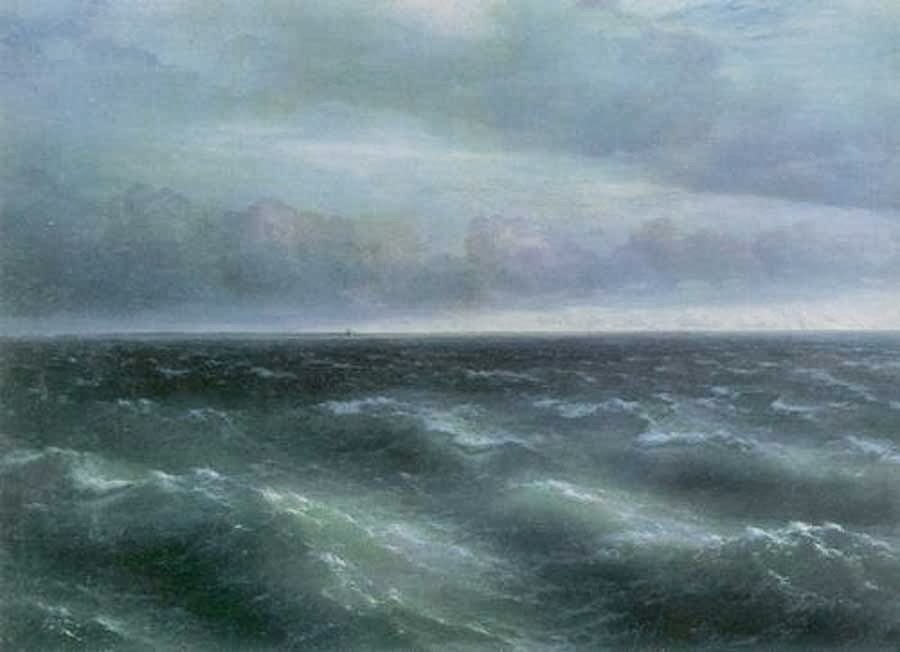
Ivan Konstantinovich Aivazovsky, Black Sea
Leonardo da Vinci, Water and Storm, 1514

See also
Climate wars, Gwynne Dyer, audio

4.11.13

Snippets

No lawn without fossil fuel

Climate
Science-denying -  production of ignorance and the public right to know.
Big Australian media reject climate science. It is not surprising therefore that levels of acceptance of anthropogenic climate change have dropped in Australia, where we have the highest emissions per person in the world.  The Conversation  011113

Mega footprint, fossil fuel turf
Sprawl
A 200 lot sub-division was approved at the site near Woolgoolga in 2010, and the developers now want to expand it to 280 lots. They also want to see a restriction on domestic cats and dogs lifted."It's a delicate ecosystem in Hearnes Lake, because it feeds into the Solitary Islands Marine Park, into an area near Flat Top Rock" abc 041113

Bushfires
threaten World Heritage wilderness west of Kempsey. The Racecourse Trail and Dungay Creek fires have now burned across almost seven thousand hectares of mainly public forest."The conditions are that dry that it's just burning through all of those normal good containments. "There are no properties under threat but there is of course World Heritage listed areas in there and the environmental impact is quite serious." abc 041113

Slash & Burn
New arson laws could see farmers charged with criminal offences. Farmers involved in approved fuel reduction burns could be charged with arson if the burns get out on control and cause unforseen damage. abc rural 041113

Meat
Growth promotants (HGP) in beef. "I've worked in the meat packing plants for many years and when beta agonists first came on the market I started seeing problems I'd never seen before, stiff sore footed cattle that kinda hurt all over, just don't want to move." China, Taiwan and Russia have also banned US beef that's been treated with beta agonists. abc rural 041113
Rural
Higher death rate for rural cancer patients. Rural patients lagging behind city counterparts on cancer treatment abc, 041113

30.10.13

Drought in the Bellinger Valley


The Bellinger Valley is experiencing the driest Spring in 43 years. abc

"Australia in the middle of its hottest-ever year...The next six months are going to be unusually hot, dry and risky." The Conversation 

Update:
North Coast enduring driest conditions in more than a century. Average rainfall was the lowest since 1901 in the region from Coffs Harbour in the south to Bundaberg in the north. abc 110814

19.10.13

Creating an inhospitable ecosystem on Earth


We have maneuvered our hospitable planet into turbulent and chaotic property changes. In the anthropocene we have profoundly modified the Earth’s landscape. Human activities are creating an inhospitable ecosystem for human biomes and the biosphere at large.

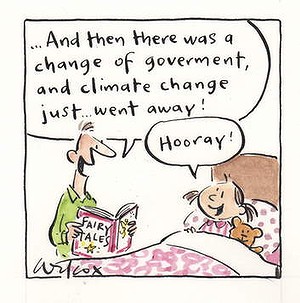
The diy catastrophic climate breakdown is due to the addiction to burning fossil fuels. We are racing into a 4 degrees Celsius scenario, although it is known that fossil fuels need to stay unburned to meet climate target of 2°C. Some engage in pathological denial and are willfully blind to it resuming business-as-usual. For some it's enough to have a “change of government and climate change just disappears!”

There will be a legacy from the ones that “dig it up, ship it out and let it burn” - an out of control array of fire 'incidents', droughts, record intense heatwaves, floods, an 11-cyclone season, sea level rise and a dead, acid ocean.


Climate disruption will have severe implications for Australia's already challenged biodiversity conservation and protected areas. "Rates of extinction of species are likely to increase as the global average temperature rises by just 1.0 or 1.5°C above pre-industrial levels, and likely to accelerate sharply as temperature rises beyond 2 degrees Celsius."

Land degradation as usual continues with clearing, logging and slash and burn. The fossil-fuel-powered culture of sprawl, mining, plantations and pastoralism munches its way through all Australian biomes.

Fear of mega fire storms
There is a tendency to reclassify all bush/ native vegetation as fuel that needs incinerating with so that it cannot burn in the future. Backburning often leads to out-of-control blazes. Hazard reductions take place in nature refuges around cities and ever growing settlements in bushfire-prone areas. Arsonists and thoughtless cigarette tossers do their bit.


It is soothing to know ...

That Australia's 25,000 plant species have found a safe habitat in perpetuity in the freezer.

That Australian wildlife threatened by climate change will be relocated.

That "a refusal to implement the Kyoto Protocol or do something about CO2...calls for a new approach to deal with people displaced by climate change." Both overseas and local climate refugees.

That there is a "fires near me" app.

Images:
Public transport station

Updates:
The refusal to make the link between the fires and climate change will condemn more people to the inferno The Guardian
Heed the warnings on the new climate reality, The Guradian 

12.9.13

Celebrating Fossil Fuel Culture on Forest Roads

The International Automobile Federation is showcasing car culture on forest roads in the Coffs Coast region. The spectacle of conspicuous consumption of fossil fuel will attract 10,000 motor enthusiasts arriving with their vehicles to enjoy the "quiet country roads and an endless network of forest trails, lush green hinterland roads, creeks and rainforest drives." They will encounter "a variety of beautiful bush settings and will find tranquil spots in the towns of Nana Glen, Glenreagh, Lowanna, Bellingen, Valla, Raleigh and Bowraville and Argents Hill." There will be the breath-taking landscapes of the Newry State Forest, Tuckers Nob State Forest and the Wedding Bells State Forest


The Mid North Coast of NSW, still has various protected refuges for Australian fauna and flora. The rich biodiversity of life is able to coexist in more or less fragmented habitats. Sprawl and the arteries of automobile dependency etch their way through 'the bush'". Logging, mining and speeding cars already encroach on the environment.

Residents living in little towns, rural dwellings or bush blocks seem to be used to the roar and dust of speeding vehicles and the local wildlife smeared across the roads. The noise pollution generated by racing cars might hardly outdo the daily chainsaws/slashers/mowers/whippersnippers/trail bikes etc.

One just tolerates things in the country...

Once the bushfire smoke from three hundred and fifty escaped hazard reductions has dissipated motorised business as usual can continue.


Traffic-Related Air Pollution, Particulate Matter, and Autism
Exposure to traffic-related air pollution, nitrogen dioxide, PM2.5, and PM10 during pregnancy and during the first year of life was associated with autism. Further epidemiological and toxicological examinations of likely biological pathways will help determine whether these associations are causal.

See also
Staging Car Races in Nine State Forests of NSW, 2014 

Noise Pollution and Vibration in the Bellingen Shire, 2015 

Update
One child dies and two other children injured in Rally Championship spectacle, the guardian 10.05.2015