Showing posts with label NSW. Show all posts

28.7.25

Habitat for coastal wetland birds

New South Wales coastal highways from the Mid North Coast to the Northern Rivers have giant traffic roundabouts. Most have a lot of masked lapwings and some white-faced herons huddled in the middle looking lost. Some are hanging out in the road drains that used to be small creeks. 

Image: Highway roundabouts for birds, Promted by Bellingen Area and ChatGPT 

13.3.25

Explosive Growth of Secondary Roads from Industrial Logging

Forest loss - (Secondary) roads from industrial logging fragment ecosystems (ChatGPT)
New roads in forest frontiers enable secondary roads that amplify human impacts. Roads are key proximate drivers of environmental impacts, including forest fragmentation.

"Tropical forests face widespread environmental threats from road expansion. Previous research established that roads enable human incursion, break up ecosystems, and intensify deforestation through land clearing, fires, and illegal resource extraction. The role of secondary roads in amplifying these effects has remained poorly quantified, leading to gaps in environmental impact assessments and conservation strategies.
Environmental impact assessments failed to account for the full scale of road-induced deforestation. " (source)

"In the tropics and beyond, roads are key proximate drivers of environmental impacts, including forest fragmentation. These secondary roads in turn can dramatically elevate forest and biodiversity losses."

Jayden E. Engert et al, Explosive growth of secondary roads is linked to widespread tropical deforestation, Current Biology (2025). DOI: 10.1016/j.cub.2025.02.017

10.3.25

Floods and the Perilous March of Australian Sprawl

Australia’s urban sprawl into flood-prone regions presents a profound case of civilisation’s unchecked expansion colliding with the very processes of nature. In the philosophy of organism the world is not a static entity but an unfolding process, a constant interplay of forces. The spread of human habitation into precarious landscapes—buoyed by a reliance on fossil fuels that further intensify climatic volatility—is a prime example of what I have termed the “fallacy of misplaced concreteness”: the tendency to treat abstracted human aspirations as if they exist apart from the living, shifting reality of nature.

Cities and suburbs stretch outward in search of economic growth and comfortable living, yet the land itself is not a passive receptacle for human will. The dynamism of rivers, floodplains, and weather systems does not submit to the rigid grids of development. The increasing frequency and severity of floods, driven in part by the very fossil-fuel-intensive activities that enable this expansion, illustrate the failure to integrate our urban ambitions within the deeper rhythms of an evolving planet.

There is an irony here—a civilisation that prizes rational planning is, in fact, perpetuating a chaotic and unsustainable trajectory. This is a problem of abstraction divorced from process. The concrete realities of atmospheric instability, rising sea levels, and the saturation of flood-prone soils are ignored in favor of a narrow economic calculus that sees only the immediate, not the emergent.

What, then, is the remedy? It is not merely a technical fix but a reorientation of thought. True wisdom does not impose an artificial stasis upon a dynamic world but seeks harmony with its processes. A city that respects the patterns of water, that adapts rather than resists, is one that aligns itself with the creative advance of nature rather than standing in opposition to it. If we are to avoid catastrophe, we must cease treating the world as an inert backdrop to human activity and recognize it as the active, evolving reality in which our own future is enmeshed.

(Curated text by Alfred North Whitehead, Process & Reality, Cyclone Alfred, Bellingen Area and ChatGPT.)

25.11.23

Australian dolphins have the world’s highest concentrations of ‘forever chemicals’

'Dolphins are the “canary in the coal mine' for coastal ecosystems. Australian dolphins have the world’s highest concentrations of ‘forever chemicals’ (source)

Hepatic concentrations of per- and polyfluoroalkyl substances (PFAS) in dolphins from south-east Australia: Highest reported globally. (source)

24.11.23

Toxic Contamination and Dead Mangroves at Boambee Creek

Mural, Solitary Island Coastal Walk, Bonville creek

Recently we observed  'A Cooked Intertidal Ecosystem at Sawtell Beach'. Today's local paper (Coffs Coast News of the Area) reports about 'Dead Mangroves at Boambee Creek'

The Boambee Creek Estuary is just north of Sawtell and south of Coffs Harbour airport. The creek traverses the suburbs of Boambee, Sawtell and Toormina, many roads and highways, industrial estates and resorts till finally it reaches the Pacific ocean.

The shoreline of the Boambee Creek Estuary and Boambee Beach is used as a playground for fishermen, dog owners and SUV owners.

Recently Kirsten Benkendorff (Professor at the National Marine Science Centre, Southern Cross University) and a Gumbaynggirr ranger of the Traditional Owners (Indigenous Protected Area Sea Country program) discovered the dead mangroves and neurotoxic contaminants at Boambee Creek.

"Most of the mangroves were rotting and the mud underneath was black and stinking and no live forms were visible. There was a smell of sulphur and petrol." 

"There was a range of toxic chemicals in the rotting mangrove roots, including carbon disulphide and petrochemicals like naphthalene, furan, xylene and cresol...Many are neurotoxic to the eyes, skin and lung."

"The site is not safe for people or aquatic life." (Coffs Coast News of the Area, 24.11.2023)

Update:

New research led by Southern Cross University has found a cocktail of nasty pesticides in oysters and water from one of the NSW North Coast’s dominant rivers. 12.12.2023
https://www.scimex.org/newsfeed/that-really-shucks-pesticide-pollution-threatens-shellfish-safety 

Pesticide residue from farms and towns is ending up in fresh oysters, 13.12.2023

https://theconversation.com/pesticide-residue-from-farms-and-towns-is-ending-up-in-fresh-oysters-219395
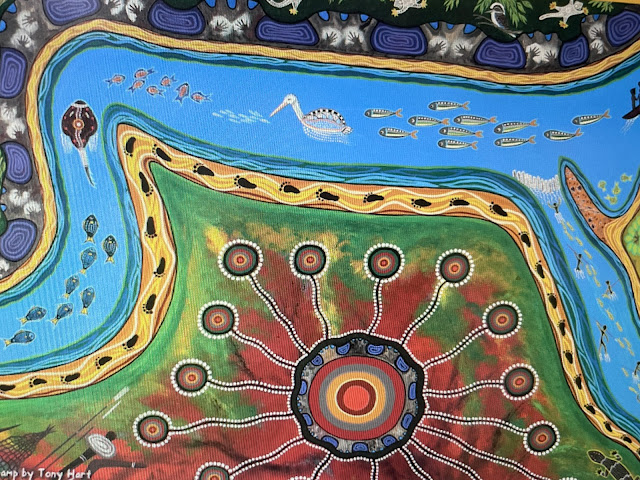
The old camp mural, Coffs Harbour, (no longer exists)dl


21.10.23

The Existence of Koalas

 
Can data gathering and the courts save the koala and biodiversity from clear felling?

The koala is an endangered species that is predicted to become functionally extinct in NSW by 2050. The NSW government plans to create The Great Koala National Park, which includes publicly-owned state forests, to halt the extinction trajectory of the marsupial. At the same time the government owned state Forestry Corporation of NSW on the Mid North Coast is planning and actively clear-felling the habitat of this endemic species.

One of the first actions for the 'world leader in mammal extinctions' would have to be to refrain from 'business as usual'. The prime reason for the marsupial's demise is the destruction of its habitat through land clearing, deforestation, logging and rapid urbanisation. The associated road designs, car crashes, mauling by roaming pet dogs shrink and degrade the already fragmented habitat even further. Fossil fuel fanned bushfires further cause death and injuries.

Ecological data is essential for the understanding and the protection of species. The quantification and simplification of ecological complexity can inform decision-makers in government and law to ensure the resilience of ecosystems and genetic diversity.

To establish the existence, distribution and population size of an endangered animal, an array of spotting and monitoring techniques are available. Wildlife monitoring can take the form of spotlighting with 'boots on the ground', searching for koala sightings (image capture), sound (recordings) or scat surveys (poo) collecting around dawn and dusk. Passionate non-expert citizen scientists and consultancy services are involved in this biodiversity data gathering and database collating. Due to resource constraints, data gathering tends to get outsourced to technological techniques that require it to be cost-effective and rapid. The monitoring methods need to be reliable and cause the least harm to wildlife and its ecosystem. Good ethical practice should prevent the risk of unintended consequences.

“Boots on the ground” and spotting koalas in food trees in the daytime is one way. Images (GIS) and searching for scat (poo) is a daytime activity. Nocturnal animals can be spotlighted at night and sound recording can be made. Marsupials can be sensitive to any human disturbance.

Motion sensor high-resolution camera traps can be installed or drones fitted with infrared cameras that buzz an area in a 'lawnmower' pattern to capture the free roaming animals. Sound encroachment by the UAVs tends to cause stress in wildlife.

To fit radio-collars on koalas can be invasive to the animals due to handling.

One of the presently favoured local methods is scent detection by sniffer dogs. Fresh scat can also be used for genetic testing of populations in fragmented habitats. Wildlife perceives introduced dogs as predators leading to stress and negative impacts. Pet dogs will leave their scent in the bush which in turn disrupts the normal cycles of wildlife. Some endemic animals can avoid the area altogether after the presence of dogs.

One less invasive monitoring method of wildlife seems to be bio-acoustics. Soundscape monitoring can detect koala bellows continuously between 8pm and 2am. Low-cost, open source recorders can be used in microphone arrays. Computer algorithms can rapidly analyse thousands of hours of audio recordings to identify specific species' occurrences. Collating the data could also be done with open software under creative commons. Biophony approaches go beyond the 'decontextualized single-species model'.

AudioMoth is such a low-cost acoustic device for monitoring biodiversity. It comes as a small recorder about the size of a credit card and has ‘hearing’ up to 190 kHz.

The urgent need to establish the existence of Australian flora and fauna through expert consultants and their technology is in the light of the continuous assault on Country.

The gathering and collating of this data verifying the existence of ecosystems has the potential to be instrumental in halting the extinction trajectory of biodiversity.

Australia is built on the imaginary foundation of 'terra nullius', an 'empty' land without Indigenous peoples. Today, the 'blind spot' takes the form of an absence or manufactured sparsity of data on Australian native plants and wildlife and justifies the continuous defaunation and eradication of endemic flora.

The sheer existence of threatened species and biodiversity conservation laws appear as an obstacle to the 'business as usual' modus. Extractivism and the financialisation of nature continue to drive the Australian ecosystems into degradation and extinctions.

Reports by scientists and data by citizen scientists are often disregarded. A huge PR industry greenwashes the central issues with 'glossy papers' and 'raises awareness' in the mainstream media channels. A busy and stressed out public is in willful ignorance about the existential issues of their home.

The 'democratic debate' of a concerned public is now replaced by pre-framed issues that have migrated from the arena of political participation into the court rooms. The dialogues of controversial political processes have been shifted from the political arena into the courts (expensive and time consuming litigation). The new terrain for dispute resolution is no longer based on a democratic participatory process, but it is confined to the legal system.

"Ultimately, peaceful political protest should be addressed by politicians. The current government has decided, by making disruption of ‘everyday life’ a criminal act, that it is a matter not of politics but for the police and criminal law. This will have serious implications for society, and for freedom of speech, whether or not you believe it is the right approach."
(source)

In this milieu political protest is forced to take the form of civil disobedience and is viewed as yet another disruption to the flow of a perfect global supply chain. Criminal law takes care of the 'spanners in the works'. It is the criminalisation of voicing dissent to a catastrophic normality.

The actors involved in this sphere are lawyers, judges and (private) ecological consultants. The public has the freedom to participate in this system via user-pays access. There, the experts deliberate about the more-than-human world and its human advocates. The ecology of this social subsystem of environmental justice is made up of ecological justice and social justice.

Constitutional law and courts have to ensure that justice is done towards the past, the present and a future. The process must ensure intergenerational equity, the rights of nature and compliance with international agreements. An array of national law/s written in the past might not be able to take account of the global poly-crisis the planet is facing today.

When human 'developments' replace other species, custodians and their institutions have to decide whether that being exists at all or will be granted the right to continue to exist at all.

Expertise is manufactured by scientists in their field, the validity is established by a community of practice and the law of the time. 500 years of global extractivism history and neo-extractivism have established a clear value system and mindsets of what are the priorities of settler societies.

Under the Myanmar military junta or Amazonian right wing governments for example, the rich and unique biodiverse rainforests of their countries cease to exist and are then transformed into simple timber, crops and cash for a few. Justifying the unjustifiable becomes superfluous.

In the west, the market steers the curating of ecological data and the decision making into the hands of external consultants that are expected to provide accurate and valid data to the courts. Third-party consultants can 'cut corners' and resort to rapid surveys and 'box checking' of bio-diverse assemblages. Problems of reliability and validity remain. Western science is the knowledge system of that very system.

In a recent reproducibility trial for example 246 biologists got widely divergent results from the same data sets. (source)

James J.A.Blair  argues that the 

“practices of accountability prioritize mining interests and enable corporations to define the standards of performance that governments will use to establish compliance”

"In the late petro-capitalist normative order, private purchasing power for short-term profit gains continues to capture data infrastructure and yield influence over public resource management...."

"Environmental “sensing practices” may serve diverse political goals and objectives for humans and more-than-human subjects..., but their ethical and social origins lie in imperial hunting, domestication and policing, rather than principles of reciprocity common to Indigenous hunting and trapping." (source)

It is said that the essential feature of capitalism is the profit motive. The destruction of native forests by the state forest corporation has to be subsidised by the taxpayers. “Over 90% of native forest that is logged in NSW is pulped and sent overseas to be used in wood chips... “ (source)

As an economic project this rationality can only be explained by short-term political gains. Would decision-makers sacrifice a highly interrelated pattern and processes of flora, fauna and ecosystems? Would they exchange highly valuable, irretrievable, unique life forms for a quick 'multiplier effect'?

Could it be that the decision makers sacrifice native forests, (‘collateral damage’) plants and animals to keep a few timber workers and fossil fuel machinery owners in work for just another while longer?

60+ % of settler society recently confirmed a clear 'NO' to the existence and participation of the Indigenous peoples in this country. Australian endemic animals and plants are still largely unknown and can hardly be named by the general public. (Knowledge of the living', Canguilhem) Numerous reports attest to the degradation of the living in settler Australia.

The state of the environment on this continent has been ‘going in the wrong direction’ (Dr Ken Henry) for the last 235 years. (source)

The denial and lack of care for Country in mind, on paper and 'out there' is overwhelming. Only by refusing to acknowledge the existence of Country can the continuing destruction be rationalised.


Links:

AudioMoth: A low-cost acoustic device for monitoring biodiversity and the environment
https://www.sciencedirect.com/science/article/pii/S2468067219300306

Audio similarity search on the Australian Acoustic Observatory media archive. Users can upload audio recordings of an animal species, find similar sounds across the database, filter by location and date, and download the results. Open Source
https://search.acousticobservatory.org/

 
Four-legged friend or foe? Dog walking displaces native birds from natural areas
https://www.researchgate.net/publication/6055768_Four-legged_friend_or_foe_Dog_walking_displaces_native_birds_from_natural_areas

 
(In) tolerance to Civil Disobedience in the UK
https://verfassungsblog.de/civil-disobedience-in-the-uk/

Reproducibility trial: 246 biologists get different results from same data sets
https://www.nature.com/articles/d41586-023-03177-1

Salvaging Empire: Sovereignty, Natural Resources, and Environmental Science in the South Atlantic, James J. A. Blair, 2023 

https://www.jstor.org/stable/10.7591/j.ctv2zmkbzx?typeAccessWorkflow=login

https://www.cornellpress.cornell.edu/book/9781501771545/salvaging-empire/#bookTabs=1

 
Tracking penguins, sensing petroleum: “Data gaps” and the politics of marine ecology in the South Atlantic
https://www.jstor.org/stable/10.7591/j.ctv2zmkbzx?typeAccessWorkflow=login

Worth more standing: As NSW’s debt mounts, NCC calls for an end to subsidies for the logging industry.
https://www.nature.org.au/as_nsw_s_debt_mounts_ncc_calls_for_an_end_to_subsidies_for_the_logging_industry

Australia’s environment must be given legal priority over land-clearing and logging to survive, Ken Henry says
https://www.theguardian.com/environment/2023/aug/25/dr-ken-henry-environment-land-clearing-logging

Updates:

What is the admissibility of expert versus citizen evidence in court? Illawarra housing developer denies presence of platypus despite 'citizen science'. Outraged by the developer's refusal to acknowledge the animal's existence.
https://mastodon.au/@Bellingen/111411065583426641 

Outsourcing koala monitoring to AI (soundscape) sensors, at Western Sydney University, 4.12.2023
https://www.abc.net.au/news/2023-12-04/biodiversity-monitoring-services-ai-track-male-koala-mating-call/103183972

2.3.17

The Big Blueberry on the North Coast of NSW

The coastline of Spain is known as the ‘Sea of Plastic’ ("Mar de Plástico”) (film)  It is the world’s largest plastic greenhouse complex with 350 square km of fruit and vegetables grown by immigrant  labour for the horticultural industry.

Will the North Coast of NSW become such an industrial plastic wrapped landscape?

This ‘country’ has had 229 years of extractive industries. The extraction and export of natural resources in colonial times and now leads to conflicts with residential areas.

Small scale rural landholdings populate the coast and the hinterland. The commons protects National Parks and reserves to afford biodiversity a home. The interface of nature reserves, human settlement and industrial production is that of conflict. “Residents and council do not know about a blueberry farm development until they are there”. (source)

The high rainfall area has been also ‘discovered’ by multinational agribusiness. Once, some of the Coffs Harbour area was know as the ‘Big Banana’, it seems now the North Coast is being developed into the BIG BLUEBERRY.


The cash crop is grown for export. After the land is cleared (image) and all Australian flora and fauna have been made homeless, the crops are grown with agri-chemicals (pesticide, fungicide etc). Runoff impacts the surrounding areas. The berries and the incorporated water and soil are sent overseas. The legacy remains.

Increased machine noise and traffic impact on residents and remaining wildlife.

The promise of ‘jobs’ reads more like ’The Grapes of Wrath’. It has been found that backpackers and non-English speaking background workers from o.s. are underpaid and exploited. (here, here, here)

The farm workers go, but residents are stuck in a neighbourhood that is becoming an industrial site. The conflict between locals and large corporate agribusiness interests needs attention by the regulatory bodies.

As coastal urbanisation increases, the space and resources shrink. The horticultural industry expands in Bellingen, Boambee Valley, Coffs Coast, Corindi, Crossmaglen, Woolgoolga, Repton, Valla, Valery and Nambucca. At Bruxner Park the views towards Coffs Harbour and the ocean are starting to look like the above plastic netting landscape, white plastic nets are gobbling up the green coastal landscape.

The 21st century could offer a chance to refrain from treating ‘country’ as a BIG QUARRY. A future beyond extraction and exploitation. Care for the commons, the water bodies, soil and biodiversity.

Authorities can regulate and monitor ‘land use’ and prevent abuse in the interest of all.

 
Quotes:
- A meeting at the CWA on Monday, March 13 at 7pm
“Intensive Horticulture is creeping into the Bellinger Valley by stealth and residents across the Shire will gather to discuss largely unmonitored and unregulated development of intensive horticulture as a new plantation has now become evident to worried neighbours from Valery,” Bellingen Environment Centre spokesperson Caroline Joseph said. (source)

- Valla: “There is no visual flow in Deep Creek and still pumping continues" (source)

- Repton: “A key feature of the village is the natural setting, surrounded by the Bongil Bongil National Park and Pine Creek State Forest. The conversion of land zoned R5 to provide for an agricultural development is wholly at odds with the primary objective of the zone.”
“Thirty-Two separate chemicals are listed in the NSW Department of Primary Industry’s Blueberry Plant protection Guide 2015-2016 for use on blueberries in NSW to control disease and pests...Of the 32 chemicals approved one third of the chemicals are identified as likely to have a long-lasting, negative off-target impact … most disturbing is that pesticides can have both immediate (acute) effects and long term (chronic) effects on the health of people who are exposed to them. ... (The) main concern is spray drift over to nearby houses whose only water is collected in tanks and consequently we will drink.” (source)

- Woolgoolga: “The development of a blueberry farm near his property further west on Newmans Rd resulted in a reduction of kangaroos in that area.” (source)

Links:
Blueberry farm in the Shire reignites the debate, Bellingen Courier, 28.02.2017
Repton resistance  Bellingen Courier, 29.11.2015 
Like living in a war zone, abc 01.03.2017 
Australian agriculture safeguarding against climate change. Structures for larger-scale growers to cover whole paddocks or orchards. abc 04.03.2017
Warning against the deliberate exploitation of young people and visa holders, Bellingen Courier, 06.03.2017

Updates:
 
Blueberry blues: how the cash crop is causing a contamination crisis in Coffs Harbour, 29.09.2022 The Guardian  
 
Calls for royal commission as report details allegations blueberry farmers pay workers $3 an hour 3.12.2020

 Concerned residents want blueberry farms to need a DA 
“We were shocked to learn that there is no monitoring or compliance required at a local (council) level to clear privately owned,forested land or to establish intensive horticulture plantations and that this concern about unregulated development is being shared across the region,” Bellingen Environment Centre’s Caroline Joseph said... Pine Creek is dying ..." Bellingen Courier, 14.03.2017

Deregulate, deregulate - "Productivity Commission recommends a wide slash of farm red tape, except biosecurity and food safety. It also recommends agricultural land should be used for its highest value, even if that means resource development." abc rural 29.03.2017

"Europe's Dirty Little Secret: Moroccan Slaves and a 'Sea of Plastic' " or landscapes a perennial plastic greenhouses, Ecowatch 2015
 
Marine scientists fingerprint sources of nitrogen on the Coffs coast. Nearly all creeks with agriculture (blueberry, macadamia) and urban land use have (sewage) water quality issues. Bellingen Courier, 16.09.2020


Images:
Greenhouses of the Campo de Dalías, Almería Province, Spain , NASA’s Earth Observatory
Organic blueberries
The March of Business, Bellingen graffiti 
 
More images:

Mar del Plastico, Bernhard Lang

4.10.15

The Shark Free Beaches of NSW


The beach is without a doubt the playground for Australians. The formation of national identity is pinned on beach culture. "Australians are islanders and we've come to expect - almost as a kind of birthright, as much as a lifestyle - a certain kind of access to open beaches..." (source) From family holidays (if not in Bali) to national surf events and festivals it is the space to be in. On 2,000 kilometres of New South Wales coast, locals and visitors showcase their beach bodies, swim, surf, play sport and empty their dogs. It appears to be the place of equality. 'Our beach' turf is fiercely defended against 'the other' (Cronulla riots). Its is the only place of summer culture.

The beach as money-making machine
Urban beaches are manicured with fossil fuel and 'renourished' with sand when climate extremes gnaw on the edges. They are artifacts with fences, furniture, nets, signs and flags. Business, surf /events/ competitions - culture, recreation space: gym/sports groups etc monetize this space and depend on it functioning. When the 'cash cow' is closed there is an outcry.

Coastal sprawl and marine urbanisation
Historically the beach turned from a place of work to a (commercialised) leisure ground with the urbanisation of the coast. 85% of people live within 50 kilometres of the coastline today. Coastal sprawl and marine urbanisation seem to concrete the coast from Cairns to Melbourne merging swelling urban centers. The large cities boast degraded biodiversity (and shark nets) and it has become relatively safe to use the beach as if it is a pool. Polluting jet skis, inflatable rescue boats and helicopters are buzzing around swimmers at city beaches for the 'safety of beachgoers'. "Beaches around Sydney, Newcastle and the Central Coast are protected by shark nets, but there is no meshing on beaches in the far north." (source)

 
More people in shark habitats
Population growth (sea change /tree change etc) on the north coast of NSW brings more human beings into the ocean than ever before. "Data from the Australian Shark Attack File indicates the increase in Australian shark attacks coincides with the increasing human population, more people visiting beaches, a rise in the popularity of water-based fitness and recreational activities and people accessing previously isolated coastal areas." (source)
Swimming, diving and some surfing take place in the shallow water. In the deeper water, the ocean is conquered by new adventurous forms of activities going deeper and further in (paddle ski, kayaking, surfing, diving, windsurfing and whale watching in tinnies etc) These plastic-aided adventure activities take place well beyond the flags and far from the mainland.

"Let's not forget the ocean is the domain of the shark." (source)
Various (no take) refuges for marine biodiversity have been established along the coast. Sharks keep the ocean healthy. "Sharks and other ocean predators help protect the ocean's carbon stores by keeping other wildlife in check." (source)

How the presence of sharks and risks are further increased
Heating the ocean through our combustion of biomass seems to benefit the ancient marine predator that has been in the ocean for the last 400 million years. Various human activities, like polluting rivers, throwing fish offal into the beach, fishing or tourism operators using bait to deliberately attract sharks increase the presence of sharks and risks.

 
Shark encounters
Recently there have been 13 shark encounters, including one death off the north coast of NSW this year. (source) Various groups react in fear and want sharks culled or repelled. "Surfers on NSW north coast call for partial cull of sharks after recent months" (source) "Long-time surfers say they are now scared to get into the water." (source) The "far north NSW communities call for shark nets, immediate action to prevent shark attacks." (source)

Extinction - we are working on it...
"Australians in particular have a peculiar, pathological feeling about sharks." (source) Ideally the species should be wiped out (like so many other Australian species) so that man can industrialise the aquatic territory without fear. In the marine habitat, the shark is framed as usual as 'the problem' that needs a 'solution'. A feel-good self-deception, also known as denial could serve to kill this 'monster' and conquer the space for human purposes once and for all. Whatever 'fix' will win, it must be cost effective and be based on technology or fossil fuel. The aim is to 'cleanse' the 'playground' of the competing apex predators (sharks, crocodiles, etc.) so that no people or business interests are harmed. It is known that there is "no “silver bullet” for deterring sharks or stopping attacks." (source). No method is 100% effective, but doing anything would soothe the mind and business as usual could continue. To turn the ocean into a shark-free pool might continue to be a pipe dream.

Risks

The comparative 'tolls' for shark mauling, dog attacks and killings by motor cars makes one wonder, that if by that logic one ought to cull dogs and take these deadly combustion machines off the roads:

  • There have been 15 shark-related incidents on the NSW coastline this year, 12 of them on the north coast. (source)
  • There were 1,191 dog attacks in the 3rd quarter of 2014/2015 in NSW. (source)
  • There have been 260 people killed  in NSW from crashing vehicles so far this year (the injured are not included) (source)


"The day you fail to find sharks cruising your favourite beach is the day you should really start to worry." (source)


Resources:
Concrete coastlines: it’s time to tackle our marine ‘urban sprawl’
http://theconversation.com/concrete-coastlines-its-time-to-tackle-our-marine-urban-sprawl-38175

Australian Shark Attack File
https://taronga.org.au/conservation/conservation-science-research/australian-shark-attack-file

New South Wales beaches closed for 24 hours after shark attack
http://www.theguardian.com/australia-news/2015/aug/23/new-south-wales-beaches-closed-for-24-hours-after-shark-attack?CMP=soc_568

Surfers on NSW north coast call for partial shark cull
http://www.abc.net.au/worldtoday/content/2015/s4291914.htm

There is deep unease about sharks in northern New South Wales, 02.10.2015
http://www.theguardian.com/environment/2015/oct/02/could-big-game-fishing-solve-the-problem-of-shark-attacks

Ballina Mayor David Wright fears Richmond River water quality could be to blame for shark activity
http://www.abc.net.au/news/2015-07-21/shark-meeting/6635678

Recreational fishermen may have unwittingly helped attract sharks to Coffs Harbour beach 16.06.2015
http://www.abc.net.au/news/2015-06-16/recreational-fishermen-might-have-unwittingly-helped-attract-sh/6549142

A dramatic increase in shark fishing, fuelled by the lucrative shark fin market, is threatening already endangered species along the NSW coast
http://www.smh.com.au/news/national/fears-for-endangered-species-as-shark-fin-market-grows/2007/08/11/1186530673607.html

Man bites shark, The day you fail to find sharks cruising your favourite beach is the day you should really start to worry.
http://conservationbytes.com/2009/01/07/man-bites-shark/

Ellison, Elizabeth (2014) On the beach : exploring the complex egalitarianism of the Australian beach. In Horatschek, Anna-Margaretha, Roseberg, Yvonne, & Schaebler, Daniel (Eds.) Navigating Cultural Spaces : Maritime Places. Rodopi, Amsterdam, Netherlands, pp. 221-235. (PDF)

Updates:
Shields and smart buoys: new technology to protect sharks and people 06.10.2015
WA Premier tells Broome to 'quietly get rid of crocodiles' on Cable Beach to protect tourism abc 09.10.2015

One of the Margaret River region's two surf life saving clubs is experiencing a downturn in membership due to increased shark activity."Going to the beach is an inherent part of the West Australian lifestyle" abc 15.10.2015

Darimont CT, Fox CH, Bryan HM, and Reimchen TE (2015) The unique ecology of human predators. Science 21: 858-860.

The NSW government announces a $16m high-tech strategy to combat shark attacks along the 2,000 kilometres of beach line. 25.10.2015 SMH

"Recreational users want to go and enjoy the water undisturbed or without the fear of being disturbed by a shark." Professor Bax 28.10.2015 abc

Shark attacks hit NSW North Coast tourism’s bottom line 30.11.2015 coffs coast advocate

Shark nets used at most beaches do not protect swimmers, research suggests  Guardian 09.02.2016

Two rare Japanese stingrays killed by Queensland's shark control program on the Gold Coast
"Successive governments have recognised the vital role the shark control program has played in protecting human life at those beaches which attract tourists from all over the world and throughout the year.” abc 22.02.2016


IMAGES:
A crowded ocean, tiles Sydney
Man in Ocean, tiles
Shark mural, Coffs Harbour
Shark without a fin, Coffs Harbour Jetty

20.9.15

Hate Crimes Against Wombats


Ten wombats, including four feeding mothers were deliberately run over and killed by a SUV driver at Bendeela camping ground, Kangaroo Valley, abc 20.09.2015


On the Making of Biodiversity Guardians 

Updates:
Footage emerged of a driver appearing to deliberately swerve at a dingo on Fraser Island, World Heritage 02102015

Image:
John Gould, Vombatus ursinus,"Mammals of Australia", Vol. I Plate 55, 1863, via Wikimedia Commons

13.9.15

The Cerura Moth, The Scott Sisters and Nature Depictions

This hairy moth was hanging out where coastal rainforest trees are allowed to be. Cerura australis (Lepidoptera) is attracted by the perfume of the Flintwood tree (Scolopia braunii). It is the favourite food plant of its larva.

Both moth and tree were depicted by the scientific illustrators and naturalists the Scott sisters, Harriet (1830–1907) and Helena (1832–1910). Their book 'Australian Lepidoptera and their transformations' was published in 1864.

The father and co-author took possession of 2560 acres of prime land on the Hunter River estuary in 1827. Ash Island was seen as a 'paradise for naturalist'. For thousands of years the Worimi and Awabakal people had cultured this tidal wetland into a biodiversity hub. Alexander Walker Scott, an entomologist of the day invited other explorers, like Ludwig Leichhardt to his tropical place and even "offered to clear 10 acres in the district, construct a cottage and establish a vineyard for Leichhardt."(source). With time the usual degradation took place at the hands of settlers: subdividing, clearing, draining, agribusiness and finally industrial use of the landscape. In 1866, AW Scott went bankrupt and sold the Ash Island property. (source)

The young women had many years to depict 'paradise' and functioned as 'lady’ plant collectors to 'male experts' as was common in colonial days. "Their father’s bankruptcy forced the sisters to seek payment for their art and endure the perceived social shame for doing so." (source) Excluded from careers, universities and learned societies they continued to draw and paint Australian animals and wildflowers commercially till the end of their life. The artists were largely forgotten (in the land of pesticides) until there was an exhibition in 2011. (source)

 
One outstanding aspect of these 'amateur' naturalists was, that Harriet and Helena were drawing from live animals. "Most natural history illustrators of the time worked with long-dead, pinned specimens that were faded and lacked colour."(source) They refused the 'pinned' appearance of butterfly and moth cadavers and let them live. They also refused to depict 'the thing' in its decontextualised form. Like Maria Sibylla Merian before them they displayed the mutualistic symbiotic relationships between flora and fauna. The plants and the animals are shown at various stages of their cycles as an educational understanding of living creatures.

The scientific minds and the market demand an encyclopedic knowledge and repository for present and future disposability. Till today 'nature' is classified for the logistics warehouse of man. The 'thing' is still pinned, cut, tagged, frozen in vaults yearning for the self-made catastrophe. The bio-diversity of the ecosystem is reduced to a free service to humanity.

Removing a living organism from its larger environmental context in mind and practice allows for the reduction of life into mere stuff, living beings become mere material for one species' industriousness or the collector's wunderkammer.

The 'thing', once removed from its habitat/ biome can be utilised or exterminated by us and we can remain in proud denial about the basis of our life being pulled from under our (and others) feet.
 
It is also popular to have individual bird sound repositories for example. The 'thing' is without it's home habitat. The soundscape ecologist Bernie Krause: " is interested in a given habitat’s entire soundscape—its “biophony”—(he) finds the single-species paradigm absurd...each living organism in a biome evolves in situ to find its own acoustic niche, based either on frequency or time, so that “their utterances are not buried by other signals.” Thus, each animal sound, plus the sounds of the wind in the trees, or waves on a beach, fit together like pieces of a puzzle to create the kaleidoscopic composition we hear. According to this theory, animals change their sounds when their habitat changes." (source)

A perception and depiction of the whole in situ could contribute to the continuing existence of the web of life.

Today Ash Island is part of Hunter Wetlands National Park.


Images:
Cerura australis
Detail of hand coloured lithograph by Harriet Scott from A.W. Scott, “Australian Lepidoptera and their transformations drawn from the life”, London, 1864

24.6.15

Aboriginal Consumption of Estuarine Food Resources and Potential Implications for Health through Trace Metal Exposure; A Study in Gumbaynggirr Country


Many of the Gumbaynggirr community rely on the Nambucca River estuary and coastal marine environment for fish and seafood. A legacy of the 'extract and dump' culture has polluted the environment with "metal-based sprays of arsenic and lead, organochlorine pesticides including DDT, dieldrin, aldrin and organophosphate pesticides...Derelict mines, agriculture, cattle dips, horticulture and banana growing left behind early generation chemical sprays and fertilizers."

Trace metals concentrations have implications for the health of the people engaging in fishing and seafood consumption. Read the details in the original study:

Shaina Russell, Caroline A. Sullivan, Amanda J. Reichelt-Brushett. Aboriginal Consumption of Estuarine Food Resources and Potential Implications for Health through Trace Metal Exposure; A Study in Gumbaynggirr Country, Australia, PLOS ONE, 2015, DOI: 10.1371/journal.pone.0130689 
Fishing and resource use continues to be an essential aspect of life for many Aboriginal communities throughout Australia. It is important for dietary sustenance, and also retains deep social, cultural and economic significance, playing a fundamental role in maintaining group cohesion, transferring cultural knowledge and affirming Indigenous identities. We surveyed approximately 20% of the Gumbaynggirr Aboriginal community of Nambucca Heads, New South Wales, Australia. This paper explores Gumbaynggirr Connection to Country and engagement in cultural practice. It quantifies fishing efforts and consumption of seafood within the community. We found 95% of the sample group fish, with the highest rate of fishing being 2-3 times a week (27%). Furthermore, 98% of participants eat seafood weekly or more frequently, up to more than once a day (24%). Survey results revealed that Myxus elongatus (Sand mullet) and naturally recruited Saccostrea glomerata (Sydney rock oysters) continue to be important wild resources to the Gumbaynggirr community. Trace metals were measured in M. elongatus and S. glomerata samples collected by community participants in this study. Maximum levels prescribed in the Australia New Zealand Food Standards Code were not exceeded in the edible tissue for either species, however both species exceeded the generally expected levels for zinc and copper and S. glomerata samples exceeded the generally expected level for selenium. Furthermore the average dietary exposure to trace metals from consuming seafood was calculated for the surveyed population. Trace metal intake was then compared to the provisional tolerable weekly intake prescribed by the Joint Expert Committee on Food Additives. This process revealed that copper and selenium intake were both within the provisional tolerable weekly intake, while there is no guideline for zinc. Furthermore, participants relying heavily on wild resources from the Nambucca River estuary may exceed the provisional tolerable weekly intake for cadmium. This suggests the need for further investigation of this issue to minimize any possible health risk.

Images:
From the outside walls of the Yarrawarra Aboriginal Cultural Centre, Corindi Beach


2.5.15

Dogs or Australian Wildlife

The majority of Australians 'vote with their feet' against biodiversity and for a monoculture of pets. Modern humans (Homo sapiens) formed an alliance with dogs early on to eradicate the local population.

Through a long process of domestication (dysgenics) they erased the wolf out of the ancient canine and ended up with an obedient dog that satisfied the desires of the master.

From the beginning, colonial society took a "dog-privileged view of the Australian landscape...The story begins with the arrival of the First Fleet. ‘From the earliest watercolours of the former prisoners, captains and surveyors, we get dogs as part of colonial life' " (source). After the introduction of 'English breeds', national identity could be established. (Leaving aside the Aboriginal Australians' culture and the dingo here).

"By the 1950s Australia ‘rode on the sheep’s back’; those who grew the wool had come to symbolise and epitomise what it was to be Australian." (source) The dog became an important factor of production to whom one could outsource mustering introduced hoofed animals.


By now one could say, the country is 'riding on the dog's back'. Having largely deserted agriculture and manufacturing, avoiding value-added activities and resorting to digging big holes, or clear cutting forests, the service industry is the sector where identity is established.

At the end of the mining boom wealth has been established for some.  For the great majority, "pets continue to power the economy". This country has one of the highest rates of pet ownership in the world, spending $1.4 billion p.a. Goods and services previously afforded for human beings only are now spent on dogs.

The dog, unlike non-human members of the great ape family, (Hominidae) has been truly included in the 'human family'. Being 'one of us', pets live the consumer's way of life and fuel the economy. The daily meat, mostly repurposed wildlife, accessories, bedding, clothing, prams, toys, medical services, insurances, vets, pet shops, dog trainers, therapists, medication, minders, groomers, hairdressers, canine boutiques, dog manicure, cafe access, tailored holiday accommodation and dogs' frequent flyers etc etc. And of course the right cars or taxi to drive the pack to the public 'loo'. Councils hold special events for dog lovers. Government collects tax. A serious economic factor with very strong interests and a lobby.

For the master the captive creature is in a hierarchical relation of permanent access. Unlike wildlife, the subordinate beast promises instant gratification for the mistresses' commands. The animal serves as a projection surface for human needs - as a friend, toy, partner, security guard, lover or punching bag. The pet owner can for once bathe in fantasies of omnipotence and power. Images of wet kisses are all-pervasive, sharing one's bed with the pack is also common. After centuries of removing the human out of the stable, people turn their dwellings back into stables for leisure pets.

The days of owning one dog are long gone, now they are hoarded in human housing, one can see dog walkers with four in harness, or outsourced to dog walkers with eight. Couples seem to express their individuality by each having two distinctive dogs. Whether people get their identity from the their decorative ornaments or priced commodity, all appear low maintenance compared to human offspring or friends.


In the 36,000 years of co-evolution of dogs and humans, the wolf has learned to manipulate the human via eye-gazing behaviour, 'puppy eyes' release a "love hormone" or "cuddle hormone" in the human being. The zombified pet owners structure their life to suit their pack. The dogs take charge.

Most pet owners in NSW seem to belong to a stay-at-home cast that service these animals 24/7. Only the best of the native landscapes will do for their 'darlings': beaches, national parks and nature reserves. They take 'a dog’s eye view of the landscape'. As the dog is mistaken for 'nature', one wouldn't want to restrain it, but let it become one with it. Unleashed, they hunt wildlife (koalas, cassowaries, little penguins, shorebirds etc) and quite frequently maul toddlers and joggers/ walkers. Should a pedestrian approach the owner, pointing out that 'dogs are not allowed here', they mutate into vicious pit bulls. Forests of signs are ignored, authorities are turning 'a blind eye' and fines are paltry.

In sub-urbia they prefer to unload  their sewage near the beach, unpack the van and let them go. The backyard does become rather smelly after some time. Full plastic bags are found on the beach, hang in vegetation or are in the drains. The majority does not pick up the sloppy poo, it stays as dung on the endless lawns on which people have their zoonotic picnics. The giant amounts of recycled meat also fuel the toxic algal blooms in the surf nicely.

Should the owners have other commitments (work) or have to attend parties, the dogs are left at home barking for hours and hours. (video) Sometimes a family toy disappoints, as puppy changes its form, it becomes a throw-away toy and a new cute baby dog is consumed. The market is also very determined by fashion influences. Should one have an outdated brand, it is time to update and dump the old one in a pound. In the holiday season many just open the door on the highway and 'the problem' is solved.


The dumped, neglected and roaming dogs in rural and peri-urban regions are then termed 'ferals'. The unwanted ballast is socialised. The 'set-free' dogs are a threat for people, wildlife and the livestock industry. From time to time mass poisoning (1080) actions take place that kill mainly the Australian endemic dingoes. No word is lost on the roaming and dumped pets gone feral.

"Australia has the worst mammal extinction rate in the world" (source) As a mega diverse, developed country people choose to entertain huge menageries of introduced animals detrimental to the endemic biodiversity. The current Australian business- as-usual trajectory will make the harsh continent even more hostile for all living beings. The intentional ignorance on climate disruption even further accelerates the extinction risk for Australian animals.

But they want pampered pooches.....


More on the family package: And then?


Updates:
The roaming dogs of Bellingen mauling livestock and pets The Bellingen courier, 19.05.2015
Have we turned dogs into lazy thinkers through domestication?
When dogs look back: inhibition of independent problem-solving behaviour in domestic dogs (Canis lupus familiaris) compared with wolves (Canis lupus)
Exporting dogs to Asia, abc 12.12.2015 
PNAS: "Bottlenecks and selective sweeps during domestication have increased deleterious genetic variation in dogs" 
 

IMAGES:
Titian, Detail of Venus and the Organ Player c. 1550 
(with Coffs Harbour sound sample, but it could be in Bellingen too)
Riding on the Sheep's Back, Blue sheep and golden dog sculpture
Public mural
Public service to collect dog feces
Trübner, Heinrich Wilhelm, Great Dane with Sausage, 1878

See also
Cura, A story about care for biodiversity
Hungry Head Beach Going to the Dogs