Showing posts with label anthropocene. Show all posts

1.7.15

The Anthropocene Biosphere


Humans are transforming Earth in absolutely unprecedented ways.

A study shows how homo sapiens has radically changed their natural home, planet Earth and has "caused shifts in world ecosystems unprecedented in the last 500 million years." (source)
  • Similar to the Great Oxygenation Events 2.3 billion years ago, human impact has produced a new kind of biosphere.
  • Intervention in the diversity of life has been the greatest for the past half billion years.
  • Our only home, planet Earth is entering a new kind of planetary state

Some of the key changes are:
•         "The homogenisation of species around the world through mass, human-instigated species invasions – nothing on this global scale has happened before

•         One species, Homo sapiens, is now in effect the top predator on land and in the sea, and has commandeered for its use over a quarter of global biological productivity.  There has never been a single species of such reach and power previously

There is growing direction of evolution of other species by Homo sapiens

•         There is growing interaction of the biosphere with the ‘technosphere’ – a concept pioneered by one of the team members, Professor Peter Haff of Duke University - the sum total of all human-made manufactured machines and objects, and the systems that control them" (source)

 M. Williams, J. Zalasiewicz, P. Haff, C. Schwagerl, A. D. Barnosky, E. C. Ellis. The Anthropocene biosphere. The Anthropocene Review, 2015; DOI: 10.1177/2053019615591020


Afterthoughts:
The global homogenisation of flora and fauna is obvious. People support a world full of poodles and horticultural weeds. They do not appreciate the endemic biodiversity of the place they dwell in. The eradication of bio-diversity is replaced with a monoculture.

Only one species (Homo sapiens) grabs 40% of net primary production

Burning fossil fuels and biomass seems an unstoppable addictive behaviour. We would rather burn to death, than modify our way of life.


Humans dictate the evolution of all other species, also having a go at their own imperfections.

We are constructing a gestell/ artifact that "could persist over geological timescales, an interaction of the biosphere with the technosphere (the global emergent system that includes humans, technological artefacts, and associated social and technological networks)." (source)


This noosphere (mind sphere) or a distributed agency seeks to expand the domination of space as well as planet Earth.

Spaceship Earth is fully in the hands and the code of the human helmsman. While vandalising the cradle of humanity and depriving the rest of life of a habitable planet, man steers for the goal of more and more.


Images:
The face of man, graffiti EU


Update:
Clive Hamilton, The Banality of Ethics in the Anthropocene, Part 1, Part 2

20.6.15

Vandalising Home


Somewhere in the oeuvre of Hans Blumenberg's Metaphorology he stated that humans are vandalising God's creation having usurped the power of sole owners of the world and the rest of the universe.

In more popular circles the same has finally been mentioned by a Pope: "If we destroy Creation, Creation will destroy us."

"We are sawing off the limb that we are sitting on." BBC

The lust to eradicate life from our only common home is a self destructive suicidal mental condition.

 
For some time we have been working hard at making the sixth mass extinction possible at ever greater speed:

Accelerated modern human–induced species losses: Entering the sixth mass extinction
"The oft-repeated claim that Earth’s biota is entering a sixth “mass extinction” depends on clearly demonstrating that current extinction rates are far above the “background” rates prevailing in the five previous mass extinctions. Earlier estimates of extinction rates have been criticized for using assumptions that might overestimate the severity of the extinction crisis. We assess, using extremely conservative assumptions, whether human activities are causing a mass extinction. First, we use a recent estimate of a background rate of 2 mammal extinctions per 10,000 species per 100 years (that is, 2 E/MSY), which is twice as high as widely used previous estimates. We then compare this rate with the current rate of mammal and vertebrate extinctions. The latter is conservatively low because listing a species as extinct requires meeting stringent criteria. Even under our assumptions, which would tend to minimize evidence of an incipient mass extinction, the average rate of vertebrate species loss over the last century is up to 114 times higher than the background rate. Under the 2 E/MSY background rate, the number of species that have gone extinct in the last century would have taken, depending on the vertebrate taxon, between 800 and 10,000 years to disappear. These estimates reveal an exceptionally rapid loss of biodiversity over the last few centuries, indicating that a sixth mass extinction is already under way. Averting a dramatic decay of biodiversity and the subsequent loss of ecosystem services is still possible through intensified conservation efforts, but that window of opportunity is rapidly closing."

Gerardo Ceballos, Paul R. Ehrlich, Anthony D. Barnosky, Andrés García, Robert M. Pringle and Todd M. Palmer. Accelerated modern human–induced species losses: Entering the sixth mass extinction. Science Advances, 2015 DOI: 10.1126/sciadv.1400253


Stanford researcher declares that the sixth mass extinction is here, Stanford Report, June 19, 2015

Pope Francis’ encyclical: On care for our common homeGuardian excerpt, (for the impatient) 18.06.2015

Karl Heinrich Leopold Deschner, A Criminal History of Christianity.

Aristotle, Nicomachean Ethics

Videos:
Paul Ehrlich, Stanford researcher warns sixth mass extinction is here, video

Prof. Hans Joachim Schellnhuber, Climate change: state of play, Director of Potsdam Institute for Climate Impact Research (PIK). video

Update:
Extinction of more threatened Australian species is not inevitable, 08.07.2015
James Trezise is a policy coordinator for the Australian Conservation Foundation

We need to tighten the law to protect wildlife homes, 13.07.2015 Don Anton , The Conversation


IMAGES:
Adel Abdessemed, Habibi Sculpture, Berlin

19.10.13

Creating an inhospitable ecosystem on Earth


We have maneuvered our hospitable planet into turbulent and chaotic property changes. In the anthropocene we have profoundly modified the Earth’s landscape. Human activities are creating an inhospitable ecosystem for human biomes and the biosphere at large.

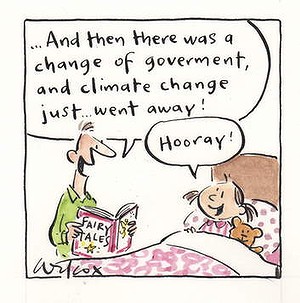
The diy catastrophic climate breakdown is due to the addiction to burning fossil fuels. We are racing into a 4 degrees Celsius scenario, although it is known that fossil fuels need to stay unburned to meet climate target of 2°C. Some engage in pathological denial and are willfully blind to it resuming business-as-usual. For some it's enough to have a “change of government and climate change just disappears!”

There will be a legacy from the ones that “dig it up, ship it out and let it burn” - an out of control array of fire 'incidents', droughts, record intense heatwaves, floods, an 11-cyclone season, sea level rise and a dead, acid ocean.


Climate disruption will have severe implications for Australia's already challenged biodiversity conservation and protected areas. "Rates of extinction of species are likely to increase as the global average temperature rises by just 1.0 or 1.5°C above pre-industrial levels, and likely to accelerate sharply as temperature rises beyond 2 degrees Celsius."

Land degradation as usual continues with clearing, logging and slash and burn. The fossil-fuel-powered culture of sprawl, mining, plantations and pastoralism munches its way through all Australian biomes.

Fear of mega fire storms
There is a tendency to reclassify all bush/ native vegetation as fuel that needs incinerating with so that it cannot burn in the future. Backburning often leads to out-of-control blazes. Hazard reductions take place in nature refuges around cities and ever growing settlements in bushfire-prone areas. Arsonists and thoughtless cigarette tossers do their bit.


It is soothing to know ...

That Australia's 25,000 plant species have found a safe habitat in perpetuity in the freezer.

That Australian wildlife threatened by climate change will be relocated.

That "a refusal to implement the Kyoto Protocol or do something about CO2...calls for a new approach to deal with people displaced by climate change." Both overseas and local climate refugees.

That there is a "fires near me" app.

Images:
Public transport station

Updates:
The refusal to make the link between the fires and climate change will condemn more people to the inferno The Guardian
Heed the warnings on the new climate reality, The Guradian