Showing posts with label contamination. Show all posts

25.11.23

Australian dolphins have the world’s highest concentrations of ‘forever chemicals’

'Dolphins are the “canary in the coal mine' for coastal ecosystems. Australian dolphins have the world’s highest concentrations of ‘forever chemicals’ (source)

Hepatic concentrations of per- and polyfluoroalkyl substances (PFAS) in dolphins from south-east Australia: Highest reported globally. (source)

24.11.23

Toxic Contamination and Dead Mangroves at Boambee Creek

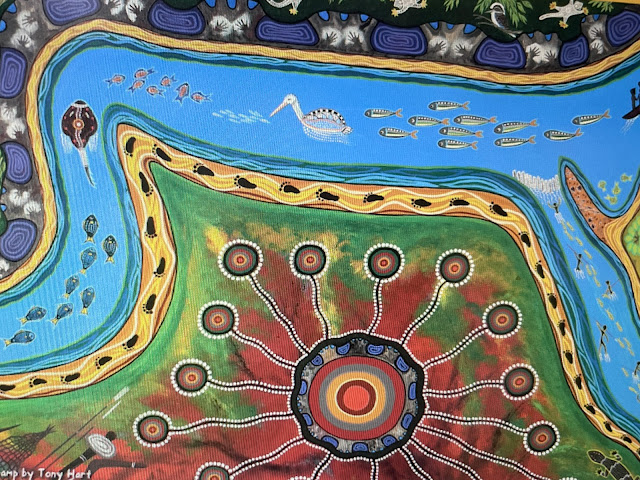
Mural, Solitary Island Coastal Walk, Bonville creek

Recently we observed  'A Cooked Intertidal Ecosystem at Sawtell Beach'. Today's local paper (Coffs Coast News of the Area) reports about 'Dead Mangroves at Boambee Creek'

The Boambee Creek Estuary is just north of Sawtell and south of Coffs Harbour airport. The creek traverses the suburbs of Boambee, Sawtell and Toormina, many roads and highways, industrial estates and resorts till finally it reaches the Pacific ocean.

The shoreline of the Boambee Creek Estuary and Boambee Beach is used as a playground for fishermen, dog owners and SUV owners.

Recently Kirsten Benkendorff (Professor at the National Marine Science Centre, Southern Cross University) and a Gumbaynggirr ranger of the Traditional Owners (Indigenous Protected Area Sea Country program) discovered the dead mangroves and neurotoxic contaminants at Boambee Creek.

"Most of the mangroves were rotting and the mud underneath was black and stinking and no live forms were visible. There was a smell of sulphur and petrol." 

"There was a range of toxic chemicals in the rotting mangrove roots, including carbon disulphide and petrochemicals like naphthalene, furan, xylene and cresol...Many are neurotoxic to the eyes, skin and lung."

"The site is not safe for people or aquatic life." (Coffs Coast News of the Area, 24.11.2023)

Update:

New research led by Southern Cross University has found a cocktail of nasty pesticides in oysters and water from one of the NSW North Coast’s dominant rivers. 12.12.2023
https://www.scimex.org/newsfeed/that-really-shucks-pesticide-pollution-threatens-shellfish-safety 

Pesticide residue from farms and towns is ending up in fresh oysters, 13.12.2023

https://theconversation.com/pesticide-residue-from-farms-and-towns-is-ending-up-in-fresh-oysters-219395

The old camp mural, Coffs Harbour, (no longer exists)dl


27.8.15

Microplastic from Clothing is Accumulating on Shorelines Woldwide


60-85 percent of human-made material found on shorelines consists of micro fibers from clothing. (source)

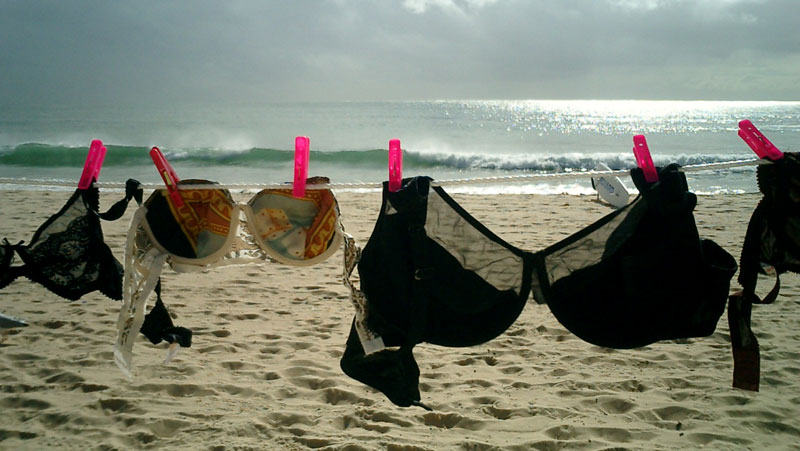
Plastic clothing has become the norm. From lingerie to outdoor gear, synthetic garments fill shops and wardrobes, cling to bodies and households. Synthetic fabrics (polyester, acrylic, nylon, rayon, acetate, spandex, latex, etc) are convenient and just require a quick spin.

The bright, fashionable colours of the season make the textiles obsolete by the time they leave the shop. Mending is out in a throw-away society. Mountains of old rags go into 'landfill' or end up in smelly second hand shops.

Synthetic and some natural fibers are often pickled in chemicals: toxic dyes, flame retardants, nano -silver and other chemicals in stain-proof textiles and waterproof clothing.


Garments that are washed by hand or machine shed fibers and chemicals/detergents into the water. As there is a paucity of sewerage systems in rural areas like Bellingen and the mid north coast, the effluent drains into the catchment. "Wastewater from domestic washing machines demonstrated that a single garment can produce 1900 fibers per wash." (source)

The shed micro fibers reach the shorelines. They are "micron-scale synthetic fibers, mostly polyester and acrylic, in sediments along beaches the world over." (source)

The invisible contamination of soil, water catchment and marine habitat with microplastic enters the food chain of all living creatures.


Natural fibers, untreated and of organic origin produced and tailored under ethical conditions (no land grab or exploitation) is the right choice to make...


Sources:
Accumulation of Microplastic on Shorelines Woldwide: Sources and Sinks
The Damage I Cause When I Wash My Clothes
Chemicals in clothing, Choice
Two-thirds of new clothing is plastic


Updates:

What does micro plastic less than 1mm do to animals?
Linking effects of anthropogenic debris to ecological impacts
Mark Anthony Browne, A. J. Underwood, M. G. Chapman, Rob Williams, Richard C. Thompson, Jan A. van Franeker, Published 22 April 2015.DOI: 10.1098/rspb.2014.2929

Chris Wilcox, Erik Van Sebille, and Britta Denise Hardesty. Threat of plastic pollution to seabirds is global, pervasive, and increasing. PNAS, August 31, 2015 DOI: 10.1073/pnas.1502108112
( 99 per cent of the world's seabirds species will be ingesting plastic by 2050 if current marine pollution trends continue. They starve to death from plastic fibres from synthetic clothes an other 'junk food'.)
or
Almost all seabirds to have plastic in gut by 2050, CSIRO


6.9.13

Hungry Head Beach Going to the Dogs

Cars shoot through Hungry Head Road, killing wildlife to get to the beach or lookout quickly.

Coastal sprawl pushes into the endemic bush sprouting lawns and exotic flora, fauna and packs of dogs.

At the beach off leash dogs run riot, most pet owners are entertaining 2-3 often large dogs. The dogs urinate and defecate as they go along the beach. Large packs of dogs roam the dunes for any possible Australian wildlife surviving there. Sunseekers do not seem to mind baking in the drenched sand.

Severe erosion, 2- 3 m high the sand has washed away. Very large wildlife supporting banksias collapse onto the beach. Black Cockatoos feed in the last remaining tall trees.
The Surf Life Saving Australia building seems to be melting into the beach. A few rocks thrown at the supporting stumps might not halt the sea level riseCollapsed stairs will soon provide easy access for motorists and their dogs again.


At all points of entry are huge signs that dogs are not allowed in this delicate area. The pet owners arriving via fossil fuel power to empty their dogs where others swim or surf must be either illiterate or lawless.

Enforcement does not seem to go further than the signs as with each year the number of exotic canines relieving themselves seems to double.

Gone are the days of Bluetounge lizards racing over the beach sand, sea shore birds resting or even nesting. Biodiversity is sacrificed to a monoculture of 'man and his best friend' from suburbia.

There is always a slight unrelaxed feeling walking along the beach as it is really a highway. Fast and powerful SUVs fly in all directions endangering the life of walkers, beach users and wildlife.

Update:
Wild dog pack ‘hunted’ down grandmother at Casuarina beach, NSW 24032015

See
Valla Nature Reserve and Urbanisation