(
This post has developed into a sporadically updated ’chronology’ of the demise of the Bellinger River Snapping Turtle (Myuchelys georgesi). The river health reveals low dissolved oxygen, degradation of native riparian vegetation and high phosphate levels in the critical reptile habitat.)
100 300 350 400 426 Bellinger River turtles have been found dead or
dying in the Bellinger River. Their "
eyes, sinus, brain and vascular system have been affected." They have "
severe internal symptoms including major organ damage." Many were
blind and malnourished.
The
Bellinger River Emydura (
Emydura macquarii)
Recovery Plan states the following threats:
"Water pollution and increased river sediment load resulting from activities including logging of native forests in the catchment upstream of the population and grazing and agricultural activities upstream and in the vicinity of the population;
construction of bridges and fords upstream and in the vicinity of the population;
extraction of river sand and gravel upstream and in the vicinity of the population; and
line fishing."
S o m e o f t h e t i m e l i n e: (u p d a t e d)
06.03.2017 Coffscoast Advocate, 21 Critically endangered Bellinger River Snapping
Turtles have
hatched in a captive breeding project. The offspring will be used to
rebuilding the population which was
wiped out 90% in 2015. But is their
habitat, the Bellinger River catchment now less
degraded?
07.11.2015 The Bellingen Courier, "
Australian turtles have existed for 50 million years, but in less than 200 years of European settlement they have been driven to the brink of extinction." Go
fetch some data on freshwater turtles dead or alive..
30.09.2015 The Bellingen Courier, "The Bellinger River Snapping
Turtle is functionally extinct, meaning that
without human intervention there would be no hope"
, Dr Ricky Spencer, Western Sydney University’s School of Science and Health and Hawkesbury Institute for the Environment.
Video
- In more detail:
Mating season key as endangered turtles recover from mystery virus, via
@emydura5
15.09.2016 The Bellingen Courier, Bello youth to investigate the degradation of the Bellinger River. After the usual
fund raising and a lot of
song&dance, young citizen science has found that:
"
The river health reveals low dissolved oxygen, poor riparian zone health and high phosphate levels in critical turtle habitat." (
source)
09.05.2016 The Bellingen Courier, To
prevent the extinction of the Bellinger River Snapping Turtle (Myuchelys georgesi)
help comes from far afield - the Abu Dhabi's species conservation fund.
The Mohamed Bin Zayed Fund will
help to conserve the Australian threatened and endangered species. Research will address
certain points about the reptiles' demise.
"However the significant number of dead turtles suggests an inability for the Bellinger River Snapping Turtle to adapt and suggests that
something is very wrong with the state of the river."
(source) The
reduced ecosystem biodiversity is in the hands of the local population...
The recovery of the imperilled Bellinger River Snapping Turtle, Myuchelys georgesi,
Mohamed bin Zayed Species project number 162512755
14.03.2016 The Bellingen Courier, One year after the mysterious
mass mortality event
survey participants trapped and tagged some surviving Bellinger River Snapping Turtles in the Bellinger and Kalang Rivers "although
the number of adults found was extremely low"
22.12.2015 The Bellingen Courier, The mass
extinction event of the Bellinger River Snapping Turtle
puts Bellingen water quality on the map internationally.
16.11.2015 The Bellingen Courier, More on logging and clear-felling in the Bellingen Valley catchment area and a
culture of silence:
“The NSW Environmental Protection Agency has recently announced a pathetic $15,000 dollar fine for Forestry Corporation’s botched clear felling operation on steep slopes at Tuckers Nob State Forest adjacent to the Never Never River Catchment in late January 2015...Regarding the death of the Georgei snapping river turtles and any relationship between the trashing of the Never Never and the turtle deaths, there has been a rigorous attempt to stop any serious community discourse about the state and condition of the river when the turtles died and all government departments have consistently blamed a “mystery turtle virus"…This neatly removes any responsibility from any Government Department either Forestry Corporation NSW the EPA or the Roads and Maritime Authority who were working at Gordon’s Cutting where a large mass of dead turtles were found."
10.11.2015 The Bellingen Courier, The turtles were “found to be suffering from an unusual and consistent pattern of
severe inflammatory lesions… A
novel virus was identified as the likely cause of the outbreak…” The public is still
kept in the dark about the pathogen type.
Dr Spencer: “The Bellinger River snapping turtle – a species over
two million years old – was in
healthy numbers in January this year, but by March it was close to
extinction.. Turtles are top predators and major scavengers and if they disappear like they have in the Bellinger River, then
water quality will be affected.”
3.11.2015 The Bellingen Courier, Construction work at Manns Bridge, Darkwood bumps into an
endangered species. The
giant barred frog halts the
excavation work. But already "the machinery has been washed down in
chlorine.."
"As a component of such works council is required by legislation to undertake environmental assessments and
prepare an environmental management plan prior to the commencement of works. In addition to these requirements as a result of the Bellinger Snapping
turtle mortality the Office of Environment and Heritage (OEH) has established a
decontamination procedure for all equipment working near the waterways to reduce the risk of
spreading pathogens to other ecosystems in the catchment. Council includes this practice when undertaking works near these waterways."
20.10.2015 Coffs Coast Advocate, The
DPI published
a report on the mass death event of the turtles. The Bellinger River Snapping Turtle Mortality Event 2015 Epidemiology report. "The turtle disease event may be
symptomatic of environmental changes
with
a series of floods late last year and earlier this year."
24.09.2015
DPI alert: Enhanced surveillance for disease in turtles
PDF. “
A disease syndrome” has affected the turtles. "They were found dead or beached on banks or
emaciated with swollen inflamed eyes and lids. On post mortem examination, there have been
gross changes to the eyes, with extension in some animals into the
sinus and brain.
Changes have also been seen in the liver, kidney, heart and spleen, with varying degrees of inflammation. These effects appear to have occurred over approximately 4-10 days."
Human
leisure activities along the 60 kilometre section of the Bellinger River and biosecurity:
PDF
21.09.2015 Coffs Coast Advocate, There will be searches for Bellinger River Snapping Turtle survivors in the coming weeks. They will also check if other turtles have been affected by the
recently identified virus that remains unknown for the public.
No information can be found whether the home of the turtle/s, the
Bellinger River (catchment), has undergone any audits for aquatic ecosystem integrity or improvements...
Bellinger River Snapping Turtle,
Myuchelys georgesi -
proposed c r i t i c a l l y e n d a n g e r e d s p e c i e s listing (
PDBellRiverSnapTurtle.pdf 59 KB) -
On public exhibition Friday 28 August 2015 – 23/10/2015
Point 9 of the
PDF has more on the taxonomy of the turtle and
the mortality event of 426 turtles. Point 10 is on the
habitat degradation and removal or degradation of riparian vegetation. The reference section has many links. 08.09.2015
02.09.2015 abc The mystery virus killing rare freshwater turtles has been
identified, but the virus remains
a mystery to the public. "There have been
no live turtles seen in the river since the initial mortality incident." Bellinger Shire Council
31.08.2015 The Bellingen Courier Sun, Breakthrough news after nearly a year: It is a (nameless) virus. "A single causative agent was responsible."
But
why did the Bellinger River's snapping turtle get the virus?
Ro McFarlane, Patterns of Ecological Change and Emerging Infectious Disease in the Australasian Region,
PDF
"A series of transdisciplinary studies is reviewed that test the
hypothesis that specific ecological change accounts for a significant
component of the rise in emerging infectious diseases (EIDs) in the Australasian region. Amongst the
range of mechanisms, factors such as wildlife adaptation to changing
landscapes and selection for antimicrobial resistance appear to be of
major significance. However, exploring multi-scale complex relationships is a challenge to epidemiology."
The role and significance of wildlife–livestock interfaces in disease ecology has largely been neglected... See
Global trends in infectious diseases at the wildlife–livestock interface, PNAS, 13.08.2015
And of course there is
a petition to 'Save the Bellinger River Snapping Turtle from Possible Extinction'. It appears that many people from overseas seem to want to keep the unique turtle alive.
06.08.2015 A new parasite in the western long-necked turtle
16.07.2015 The Guardian, It is noteworthy that freshwater turtles subjected to the illegal wildlife trade, living in “
terrible conditions",
deprived of “food or water for about six months, destined for the pet and food markets in Hong Kong and China” also suffered from
eye ulcers and other health problems.
16.07.2015 The Guardian, 10 Australian species at extreme risk of extinction: can they be saved? Unfortunately the Bellinger River snapping turtle has made it into the '10 Australian species list' that are about to be
pushed off the planet. "Freshwater turtles are
crucial to river ecosystems because they eat dead and decaying matter." The end of a "permanent
grin" and clean water.
02.06.2015 Bellingen Courier Sun,
Roads to Ruin... or 'Oil slick raises concerns'.
Finally the spotlight is on water quality. The
'blind spot' in the inquiry might be overcome and behind the obscuration lurks a "potential contamination from
road run-off into the river system...
Dorrigo Quarry upgrade and the subsequent
increased number of trucks driving up and down the mountain. There are claims that "
the oil slick from the road’s surface is making its way into the waterway...The slick on the river appears on a regular basis and it’s coming from vehicles"
"The “results of the water testing indicated that the level of
hydrocarbons and
BTEX (
volatile organic compounds found in petrol)
in the water meet Australian fresh and
marine water guidelines." Said Council’s general manager. NB Links are not in the original article.
More on
Pacific Highway '
upgrade'. Or straight to
Bill Laurance,
Roads to ruin.
Saving the Bellinger River turtles through IVF?
23.05.2015 abc/video 'Mystery illness' gives birth to
the first wildlife biosecurity team in NSW. They set up
quarantine facilities (in Sydney) to save the Bellinger River turtles from extinction.
Should there not be
biosecurity warning signs up and down the river?
23.05.2015 Guardian, "Turtle on edge of extinction after sudden attack by mystery disease
A species of turtle has been pushed to the brink of extinction over the course of just one month after a mystery disease swept through its habitat in New South Wales...“For this to occur over the period of a month is very alarming. It’s a mystery event never seen in Australia before. It may take years before we find out what’s happened here...“What we do know is that it kills and it kills rapidly. Within a month, the turtles have gone from not threatened to endangered or critically endangered. The problem is that they only exist in the Bellinger river and nowhere else in the world, so a population crash here means extinction.”....
The alarming decline, revealed on what is world turtle day, is the latest woe faced by a freshwater turtle species. According to the IUCN, 62% of the world’s freshwater turtle species are either threatened or endangered.
Freshwater turtles are considered crucial to the health of river ecosystems because they eat dead and decaying matter and help recycle nutrients."
23.05.2015 abc 'Scientists race against time /
Scientists are scratching their heads.' Lawrence Orel, from the NSW Office of Environment and Heritage: "Unfortunate as it is for that species, we've not been able to detect any other impact on other species or turtles in the river, or other fauna in the river."
23.05.2015 abc AM "The incident has
baffled scientists...
Zoologist Dr Ricky Spencer: Their whole range could be affected by now; we don't know that. We basically had to go in before winter and recover what we could. And if their whole range is affected, then there may be no other turtles out there.
We know that it wipes them out very, very quickly. Individuals get lesions - and particularly around their eye - but throughout their whole body there are these lesions that basically kill them and it has a 100 per cent mortality rate.
...It's not a population crash, it's an extinction event."
05.05.2015 Australian Geographic The Bellinger River snapping turtle is on a bleak
trajectory toward extinction. "ONCE (1788?) AN UNTOUCHED wilderness (?) of hills, valleys and waterfalls, the
Bellinger River National Park is
now (2015!) a graveyard for river turtles infected by a mysterious and deadly illness..."
28.04.2015 abc A mystery virus has swept through more than 90 percent of known habitat in the Bellinger Catchment,
killing every Bellinger River Snapping turtle it has infected.
Since mid-February vets have been
working on identifying the '
mystery virus'. 17 healthy turtles were removed from their habitat and put on a breeding in
captivity program. An interplay between
extinction and hope.
..
07.04.2015 Coffs Coast Advocate The Raising Awareness stage: A forest of
signs has been installed by Bellingen Shire Council warning the Snapping Turtles of
human impacts. "Diagnostic testing is
still underway to try to identify the cause of this
epidemic in the Bellinger River Snapping Turtles."
05.04.2015 Bellingen Shire Council Updates: Bellinger River Snapping Turtle Deaths
abc 29.03.2015 A
sharp decline in turtle numbers in the Riverland of South Australia. Authorities estimate
the freshwater turtle population has dropped by as much as 90 per cent over the past four decades.
26.03.2015 NSW gov. Bellinger River Snapping Turtles #4 (PDF) “
We have not yet found evidence of a highly pathogenic organism, but the investigation continues” Dr Karrie Rose, from the Australian Registry of Wildlife Health at the Taronga Conservation Society
The Conversation 25.03.2015,
Ricky Spencer,
Turtle extinction event bodes ill for our waterways
"Turtles are an evolutionary success story, having persisted for over 220 million years...
They are also long-lived and turtles can bio-accumulate toxins
in their shells. Regular sampling (shell or nails) of marked
individuals can be used to monitor long-term exposure to toxins and
pollutants in the river – something that snapshot monitoring of water
quality may miss.
The current disease threatening to drive the Bellinger River Snapping Turtle to extinction is a potential window into a long-term breakdown of ecosystem services. The possible extinction of a long-lived ancient species that has survived several million years might be a significant warning sign of the current state of our freshwater environments.
Yet the peril of this one turtle species is more than an isolated issue. It gives us a window into the health of the entire ecosystem around the Bellinger River, and suggests something is very wrong."
ABC 25.03.2015 Mystery! "
We may never know what the cause of this outbreak has been...But
certainly, we'll be taking steps to ensure the population is conserved
as best we can." Geoff Ross, Incident Management Controller
Zilch outcome, zero news on the pathogen ecology (that is outside the turtles' bodies) - An
emerging infectious disease (
EID) ?
Bellingen Courier 24.03.2015 "There is little more the Incident Management Team (IMT) can achieve.... More than 315 turtles, about 10 per cent of the population, have been
found dead or dying as a result of contracting the disease and experts
said “there is an intensive ongoing effort to determine the cause of the
mortalities, involving at least
seven specialist institutions. A number
of serious pathogens have been excluded, and work is ongoing.
Novel
pathogens can be frustrating to elucidate and require significant
time”."
- On the
impacts of the
road maintenance practices in the area. Boggy Creek (
riparian area) and
heavy machinery.
NSW government PDF factsheet/ map 03.2015 Bellinger river turtle deaths
ABC Coffs Coast 24.03.2015. "Officials from the Incident Management Team said the kill was
unprecedented.
Never before has a species been affected so dramatically in such a short time.
"
18.03.2015 abc When the habitat is degraded -
artificial breeding is the answer. To repopulate the Bellinger River with snapping turtles again could take
100 years.
18.03.2015 Bellingen Courier Bellinger River Snapping Turtles (Myuchelys georgesi) mortality update: An "
unexplained mortality event" in the Bellinger River. "Surveys indicate that turtles along
42km of the Bellinger River between Bishops Creek at Darkwood and Lavenders Bridge in Bellingen are affected."
16.03.2015 abc Quarantine measures considered to ensure survival of Bellinger River turtles
. Nearly 20 percent of the species may have now been lost to the unknown
'mystery' pathogen.
14.03.2015 Coffs coast advocate (Update) Bellinger turtles response team forms. "Only Bellinger River
Snapping Turtles are affected, with almost
300 severely affected or dead
turtles found to date with
severe internal symptoms including major
organ damage.
"
Bellingen Council, Bellinger River Snapping Turtle Deaths,
factsheets
10.03.2015 Bellingen Courier (Update) Message:
Stay clear of the waterways. "New England National Park’s upper
catchment, including Brinerville, has been
closed until further notice as wildlife officers discover more dead turtles higher up the Bellinger River...Though there’s nothing to explain why affected turtles are found suffering blindness, leading to inability to feed and subsequent starvation,
the vacuum in scientific data been filled by locals’ theorising everything from long-term environmental
degradation of the Bellingen River, the 2014
drought followed by the recent rains, to a claim that chemicals from an
ice drug lab have polluted the waterway.
"
06.03.2015 env.gov.au (Update) Bellinger River turtle mortality update: #2 Incident Controller and NPWS Senior Wildlife Management Officer reporting on the
pathogen ecology of the area.
Images
05.03.2015 Coffs coast Advocate (Update) "Assessment teams will begin monitoring the river upstream of Thora to map exactly as possible the extent of the area where turtles have been affected. Water quality sampling failed to identify contamination including pesticides, organochlorines, organophosphorous and pyrethroids. Results on turtles sent to Sydney for clinical and pathology analysis are expected later this week."
04.03.2015 Courier-Sun Microorganisms are to blame. "EPA officers also carried out an inspection of
road works being carried out by the Roads and Maritime Services (RMS) at
Myers Bluff on Waterfall Way. No environmental issues were identified but the EPA requested that RMS carry out a thorough review of its activities to ensure there are no underlining environmental issues which may affect the river."
03.03.15 NPWS-led team investigating 100+ freshwater turtle deaths in Bellinger Rvr.
No obvious cause. Possibly viral or fungal
27.02.15 abc EPA rules out toxic spill as the cause of a large Bellinger River turtle kill. EPA officers took the
samples from four key locations along the river including at
Myers Bluff and Thora Bridge.
24.02.15
Flood warning for Bellinger River at Thora
12.09.14
Road safety work Water Fall Way - examined a 40 kilometre stretch of road from Tyringham Street at Dorrigo to the junction of the
Pacific Highway . “Work to strengthen and
stabilise the slope at Myers Bluff and Gordonsville was also fast tracked to ensure that road safety benefits are in place by the end of 2014.”
27.08.14
Minor flood warning for Thora
At a slightly different location of the river:
17.12.2014 A semi trailer with
27 tonnes of
fertilizer rolled into the Bellingen River along North Bank Rd.
>Pollution in urban and
farm runoff in Hawaii is causing
tumors in endangered sea turtles.
Duke news 2014. “
Eutrophication and the dietary promotion of sea turtle tumors,” Kyle S. Van Houtan, Celia M. Smith, Meghan L. Dailer and Migiwa Kawachi, published September 30, 2014 in PeerJ. DOI: 10.7717/peerj.602 via
Links:
Bellinger River emydura - vulnerable species listing, 1997:
"Threats to Emydura macquarii (Bellinger River form), include extraction
of river sand and gravel, construction of bridge and ford crossings
upstream of the species location, low intensity grazing and agricultural
activities in downstream reaches of the Bellinger River, logging of
native forests leading to water pollution and soil degradation, and line
fishing as a possible minor threat."
Bellinger River Turtles- A Window to a National Crisis? Some
local background on the the Bellinger River Emydura.
2014 Bellingen Shire Council, Implementing the
Dairy Effluent Assessment and Planning Project of the Bellinger River
Waterfall Way - Lining the Pacific Highway with Crumbled Mountain
UPDATE/Readings:
Agricultural insecticides pose a global risk to surface water bodies, PNAS
The first global map (
Australia) to be produced on potential insecticide contamination, The Helmholtz Centre for Environmental Research - UFZ, 25.02.2015
Alessio Ippolito, Mira Kattwinkel, Jes J. Rasmussen, Ralf B. Schäfer, Riccardo Fornaroli, Matthias Liess (2015):
Modeling global distribution of agricultural insecticides in surface waters. First global map on insecticide runoff through modelling. Environmental Pollution, Volume 198, March 2015, Pages 54-60, ISSN 0269-7491,
http://dx.doi.org/10.1016/j.envpol.2014.12.016
1/3 of freshwater shrimp at extinction risk due to invasive species, climate change and agricultural and urban
pollution. Dead shrimp blues: Assessing the extinction risk in freshwater shrimps,
scimex 26.03.2015
Dead Shrimp Blues - the imperilled status of freshwater shrimps,
IUCN,
PLOS 25.03.2015
An attack on two fronts: predicting how changes in land use and climate affect the distribution of stream macroinvertebrates
Freshwater Biology, 04. 2015
Conservation Biology of Freshwater Turtles and Tortoises, IUCN
Pharmaceutical residues increasingly disrupt aquatic life: A hidden global change
Science daily 02.02.2016 Ever larger amounts of pharmaceutical residues, such as female hormones from the contraceptive pill, have been finding their way into the water -- through urination by
humans and livestock. ..
Images
1. Turtle,
Yarrawarra Aboriginal Cultural Centre at Corindi Beach.
2./3. Turtles, Bellingen tiles
4. Bellingen mural, Cow in river
5. Dragonflies and happy
invertebrates on fresh water eu


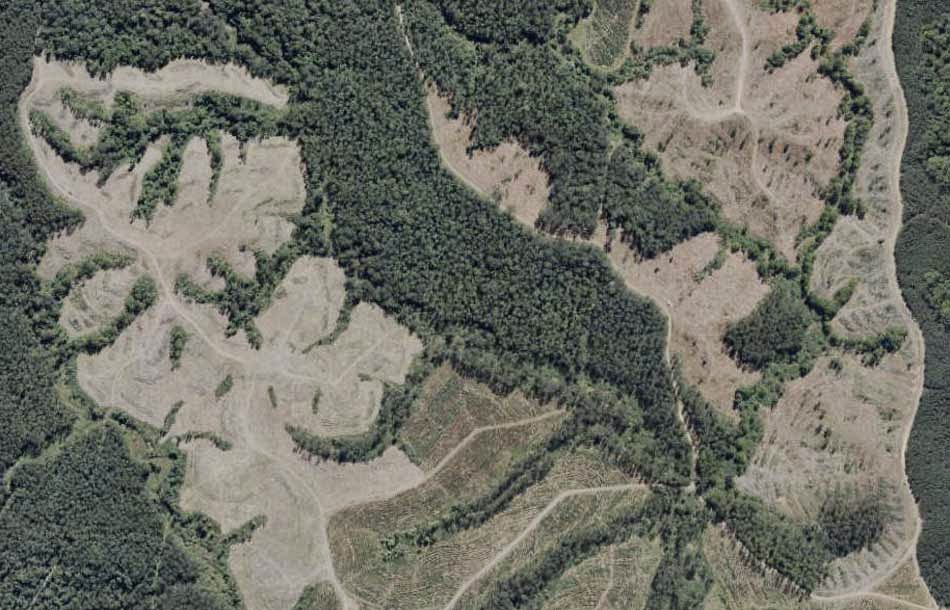


 The latest case of land-use conflict came to a head between residents near the Gladstone State Forest between
Bowraville and Bellingen. Forests NSW was going to aerial sprays herbicide over 175ha of logged
eucalyptus plantation. They argued that
The latest case of land-use conflict came to a head between residents near the Gladstone State Forest between
Bowraville and Bellingen. Forests NSW was going to aerial sprays herbicide over 175ha of logged
eucalyptus plantation. They argued that


