29.8.15

The Gleniffer Quilt and Craft Fair 2015

"Nature uses only the longest threads to weave her patterns, so that each small piece of her fabric reveals the organization of the entire tapestry.” Richard Feynman

The Quilt and Craft Fair was on again in the Gleniffer community Hall near the Never Never River. Here are some impressions of the works:

Click images to enlarge

Images:
Crochet west, via Dorrigo?
Lichen (Usnea sp.) on fence post near the Never Never River
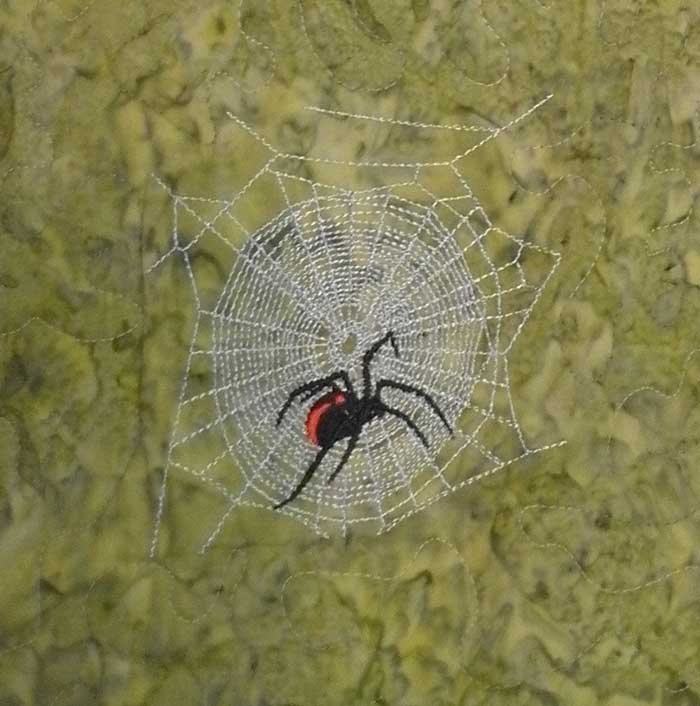
Detail of quilt: Redback spider
Rug with circular design
Rug from the recycled seams of jeans
Detail of Rug from the seams of jeans
Rug from rags
Detail from floral/geometric quilt
Detail of quilt: Dingo and black swans
Detail of quilt: Emu
Gleniffer Church window with a hint of Toona ciliata


The Gleniffer Quilt and Craft Fair 2013

27.8.15

Microplastic from Clothing is Accumulating on Shorelines Woldwide


60-85 percent of human-made material found on shorelines consists of micro fibers from clothing. (source)

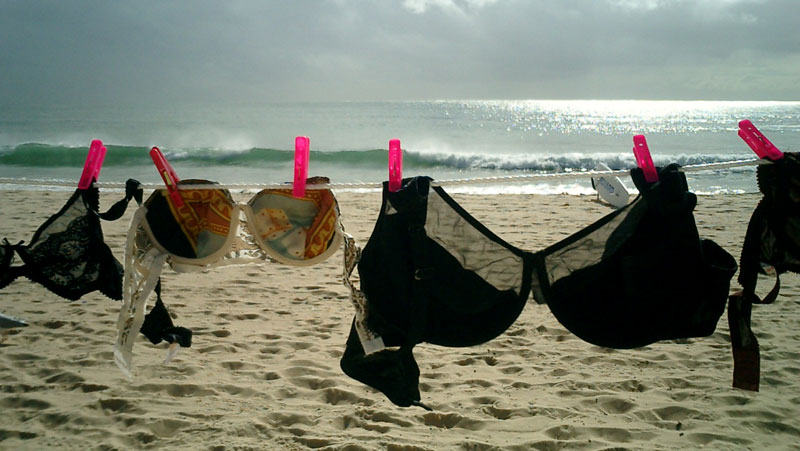
Plastic clothing has become the norm. From lingerie to outdoor gear, synthetic garments fill shops and wardrobes, cling to bodies and households. Synthetic fabrics (polyester, acrylic, nylon, rayon, acetate, spandex, latex, etc) are convenient and just require a quick spin.

The bright, fashionable colours of the season make the textiles obsolete by the time they leave the shop. Mending is out in a throw-away society. Mountains of old rags go into 'landfill' or end up in smelly second hand shops.

Synthetic and some natural fibers are often pickled in chemicals: toxic dyes, flame retardants, nano -silver and other chemicals in stain-proof textiles and waterproof clothing.


Garments that are washed by hand or machine shed fibers and chemicals/detergents into the water. As there is a paucity of sewerage systems in rural areas like Bellingen and the mid north coast, the effluent drains into the catchment. "Wastewater from domestic washing machines demonstrated that a single garment can produce 1900 fibers per wash." (source)

The shed micro fibers reach the shorelines. They are "micron-scale synthetic fibers, mostly polyester and acrylic, in sediments along beaches the world over." (source)

The invisible contamination of soil, water catchment and marine habitat with microplastic enters the food chain of all living creatures.


Natural fibers, untreated and of organic origin produced and tailored under ethical conditions (no land grab or exploitation) is the right choice to make...


Sources:
Accumulation of Microplastic on Shorelines Woldwide: Sources and Sinks
The Damage I Cause When I Wash My Clothes
Chemicals in clothing, Choice
Two-thirds of new clothing is plastic


Updates:

What does micro plastic less than 1mm do to animals?
Linking effects of anthropogenic debris to ecological impacts
Mark Anthony Browne, A. J. Underwood, M. G. Chapman, Rob Williams, Richard C. Thompson, Jan A. van Franeker, Published 22 April 2015.DOI: 10.1098/rspb.2014.2929

Chris Wilcox, Erik Van Sebille, and Britta Denise Hardesty. Threat of plastic pollution to seabirds is global, pervasive, and increasing. PNAS, August 31, 2015 DOI: 10.1073/pnas.1502108112
( 99 per cent of the world's seabirds species will be ingesting plastic by 2050 if current marine pollution trends continue. They starve to death from plastic fibres from synthetic clothes an other 'junk food'.)
or
Almost all seabirds to have plastic in gut by 2050, CSIRO


6.8.15

A new parasite in the western long-necked turtle


The western long-necked turtle is found in metropolitan Perth and across south-west WA. When some of the turtles had to be rescued from car accidents,  pet attacks and habitat destruction it was discovered that the oblong turtle (Chelodina colliei) hosts an entirely new species of Eimeria parasite. All 25 turtles had the spore-like oocysts parasites in their faecal samples. None of the turtles displayed clinical signs of coccidiosis—disease caused by parasites including Eimeria collieie.  This is "a first for Australian turtles."

Coccidiosis is commonly found in cattle where it destroys the cells of the intestinal lining.

The interest here is the concern about the Bellinger River turtles ((Emydura macquarii) which have been made extinct through a 'mystery' bug in the Bellinger river environment. The river is flanked by a bovine and livestock milieu.


400 Bellinger River turtles have been found dead or dying 

Eimeria collieie n. sp. (Apicomplexa:Eimeriidae) from the western long-necked turtle (Chelodina colliei). 07.2015
Rescued turtles turn up new parasite 30.07.2015 ScienceWA

Image:
Tea towel print

27.7.15

Sewage discharge and shellfish don't mix. The Bellinger-Kalang rivers.

"One of the more pervasive aspects of European settlement was the pollution of the air and water." (source)
"The indications are that we will not have, inside the Bellinger-Kalang, an oyster industry within the next two years...” (source)

"The Aborigines on the coastal regions feasted on oysters and shell beds can be found in the many kitchen middens along the coast. Some of these middens have been carbon-dated to ten thousand years." (source)

Oyster growers on the NSW Mid North Coast are going to grow Sydney Rock Oysters in land-based tanks now to control water quality. "The Bellinger River was closed for 270 days last year due to heavy rainfall." (source)

Along the Bellinger River catchment and the Kalang River dense settlements sprawl along that are not on any sewer system. The majority of the rural blocks are on an on-site sewage management system (OSMS).

In 2008 sewage bacteria really hit the filter feeding oyster beds. "The NSW Food Authority closed the Kalang River at Urunga in August while a search was made for norovirus, which causes gastroenteritis in humans." (source)

Sewage discharge and shellfish don't mix
"The Bellingen Shire Council says septic systems in the river catchment have been identified as a possible source of the pollution...One of the potential contamination sources are privately operated onsite sewage management systems." (source)


Aquaculture farmers have been waiting for seven years for the Kalang River to reopen to oyster harvesting. "Protracted river testing, analysis and meetings began with riverside septics found to be high on the list of culprits, especially on Newry Island and along Urunga’s Atherton Dr." (source). Additionally the "Urunga sewage treatment plant, holiday cabins, two caravan parks adjacent to the river." were also mentioned as sources of contamination. (source)

After the endemic totem of the river, the Bellinger River turtle has been pushed into extinction, the question of water quality and river health is an acute one for the entire catchment.

Updates:
Dairy growth in north-west Tasmania causing concern for oyster farmers: effluent run-off from farms. abc 13.08.2015


Images:
Beert, Osias, Still life with oysters, c. 1610
Bellingen tiles

24.7.15

The acoustic ecology of native bird extinction and the sound of “cock-a-doodle-doo”

For eons the Laughing Kookaburra has been announcing the break of dawn for eastern Australia. The loud 'koo-koo-koo-koo-koo-kaa-kaa-kaa' is often heard in a chorus. The bird is one of the larger members of the kingfisher family and lives in one place for most of its life. It also mates for life.

The more settlers convert bio-diverse landscapes into mono-culture and populate it with alien species, the ecology changes into an artifact. The soundscape too takes on the characteristic of a noise composition.

Now the highest-ranking rooster has priority to announce the break of dawn. The (overseas) circadian clock of the domesticated fowl often is set off long before dawn. They do not sing in a chorus but in a strict hierarchical pattern. The sound of “cock-a-doodle-doo” echos over the dark valleys. Barking dogs and cars complete the early morning cacophony.

Non-native species and fossil fuel combustion machines constitute the ambient soundscape that announces the break of dawn of more industrial activity. The bird chorus of kookaburras and other common native birds fades as the environmental noise increases.

Deforestation and land clearing robs Kookaburras (and other Australian wildlife) of their homes which they need for nesting, roosting and perching to catch snakes and mice. The generously splashed pesticides poison the insects that the birds eat.


Kookaburra and magpie among Australian birds in decline, says report , Guardian 15.07.2015

Magpies, kookaburras and willie wagtails among common Australian birds 'starting to disappear', report suggests, abc, 15.07.2015

The highest-ranking rooster has priority to announce the break of dawn, Tsuyoshi Shimmura, Shosei Ohashi, and Takashi Yoshimura, July 23, 2015 in Scientific Reports, 5, Article number: 11683. DOI: 10.1038/srep11683

http://birdlife.org.au/state-of-birds/

Wedge-tailed Eagle vs rooster

Wedge-tailed eagle rescued from a chicken coop. WIRES
 

Images
Graffiti EU

12.7.15

The Park Beach Reserve, Coffs Harbour and Land Care

Click to enlarge
The Park Beach Reserve is unusual for NSW because it has a remaining strip of coastal bush separating it from the 'wanna be a Gold Coast'  high rises on Ocean Parade.  In the age of rising sea levels the Australian habit of building ON the beach and erasing protective vegetation barriers should be a thing of the old days.

The mushrooming tall buildings of Ocean Parade have a slim buffer at the front and back separating them from the road (Hogbin Drive) and the glaring light pollution from a bare sport field framed by large weeds (pines). The busy road and the speeding cars gobble up the green margins. Burnout wrecks set the bush alight and garbage is generously dumped by motorists.

A wide strip of vegetation bordering the road is regularly doused with herbicide, giving the edge of the little forest a brown and dead appearance. In the latest addition to 'land care', it seems that the endemic littoral rainforest species were just hacked to the ground with no apparent reason.

Maybe flat dwellers requested a better view of the noisy road and access to the light glare opposite? All weeds have been left standing. They are working hard on making Coffs Harbour even more ugly.

1.7.15

The Anthropocene Biosphere


Humans are transforming Earth in absolutely unprecedented ways.

A study shows how homo sapiens has radically changed their natural home, planet Earth and has "caused shifts in world ecosystems unprecedented in the last 500 million years." (source)
  • Similar to the Great Oxygenation Events 2.3 billion years ago, human impact has produced a new kind of biosphere.
  • Intervention in the diversity of life has been the greatest for the past half billion years.
  • Our only home, planet Earth is entering a new kind of planetary state

Some of the key changes are:
•         "The homogenisation of species around the world through mass, human-instigated species invasions – nothing on this global scale has happened before

•         One species, Homo sapiens, is now in effect the top predator on land and in the sea, and has commandeered for its use over a quarter of global biological productivity.  There has never been a single species of such reach and power previously

There is growing direction of evolution of other species by Homo sapiens

•         There is growing interaction of the biosphere with the ‘technosphere’ – a concept pioneered by one of the team members, Professor Peter Haff of Duke University - the sum total of all human-made manufactured machines and objects, and the systems that control them" (source)

 M. Williams, J. Zalasiewicz, P. Haff, C. Schwagerl, A. D. Barnosky, E. C. Ellis. The Anthropocene biosphere. The Anthropocene Review, 2015; DOI: 10.1177/2053019615591020


Afterthoughts:
The global homogenisation of flora and fauna is obvious. People support a world full of poodles and horticultural weeds. They do not appreciate the endemic biodiversity of the place they dwell in. The eradication of bio-diversity is replaced with a monoculture.

Only one species (Homo sapiens) grabs 40% of net primary production

Burning fossil fuels and biomass seems an unstoppable addictive behaviour. We would rather burn to death, than modify our way of life.


Humans dictate the evolution of all other species, also having a go at their own imperfections.

We are constructing a gestell/ artifact that "could persist over geological timescales, an interaction of the biosphere with the technosphere (the global emergent system that includes humans, technological artefacts, and associated social and technological networks)." (source)


This noosphere (mind sphere) or a distributed agency seeks to expand the domination of space as well as planet Earth.

Spaceship Earth is fully in the hands and the code of the human helmsman. While vandalising the cradle of humanity and depriving the rest of life of a habitable planet, man steers for the goal of more and more.


Images:
The face of man, graffiti EU


Update:
Clive Hamilton, The Banality of Ethics in the Anthropocene, Part 1, Part 2