20.9.15
Hate Crimes Against Wombats
Ten wombats, including four feeding mothers were deliberately run over and killed by a SUV driver at Bendeela camping ground, Kangaroo Valley, abc 20.09.2015
On the Making of Biodiversity Guardians
Updates:
Footage emerged of a driver appearing to deliberately swerve at a dingo on Fraser Island, World Heritage 02102015
Image:
John Gould, Vombatus ursinus,"Mammals of Australia", Vol. I Plate 55, 1863, via Wikimedia Commons
16.9.15
The Eels of Bellingen and the Making of Biodiversity Guardians
The scene
The Bellingen River community has just recently allowed the totem of their river, the Bellinger River Snapping Turtle, (Myuchelys georges) to go the way of the dodo. After a mass mortality event it is now listed as a critically endangered species. (PDF)
The event
Soon the 'Bellingen Eel Fishing Championship' will take place. The maltreatment of the endemic Longfin Eels (Anguilla reinhardtii) is 'terrific family fun' promising that 'the kids (will be) amused during the holidays.' (source)
The options
One could instead educate young Australians about the unique fauna and its environment, but the usual 'take, chuck and run' culture is perpetuated.
The eels
Since ancient times, the living fossil has fascinated humans as it has a very mysterious life-cycle. Till today knowledge of freshwater eels and their oceanic migrations and spawning in the tropical Pacific is very limited. Once in their life they travel some 850 km away from their home using smell and magnetism to spawn in unknown locations. During their 6 - 12 month journey they do not feed.
In the EU the Anguilla anguilla is now critically endangered (PDF). After numbers dropped by 99% in 20 years, they have proposed a fishing ban. (source) In NZ the species is overexploited. The Japanese eels are at risk of extinction. The American eel is also in danger of extinction (source). The Taiwanese eel is now perilously close to extinction. (source) It is now uncool to kill and eat the species in many countries.
The young guardians
The media abounds with (young) Australians torturing, maiming and killing Australian wildlife and pets. Drive-by shooting of livestock occurs or the latest fashion is killing by bow and arrow. Hate crimes against wildlife are common. Here, here, here, here, here, here, here etc

It is possible that individual animal cruelty is just an expression of a national mindset of excelling at the extinction of Australian biodiversity. "Australia is recorded as one of the countries with worst extinction records in the world." (source) Unique animals and plants are allowed to slip into extinction.
On the making of empathy
It has been found that preschool children in NSW "showed callous and unemotional traits such as lacking remorse or empathy for the feelings of other people." The psychopathic traits found could lead to anti social behaviour against their own species (bullying, family violence) or cruelty against any creature.
The undeveloped emotional skills can be acquired by interacting with offspring and teaching "the parents how to be very warm, involved and loving with them to see if that reduces those callous traits over time." (source)
"Respecting other forms of life is not an intrinsic value – it has to be taught, and it has to be learned. While there are certainly exceptions, I am of the opinion that unless you discourage children from that sort of behaviour, it will proliferate into adulthood...Unless we can convince children to respect other species, we can expect to continue failing to elicit much sympathy for the plight of global biodiversity." (source)
Sources:
The Mysterious Incredible Life-cycle of Short-finned Eels PDF
Oceanic migration behaviour of tropical Pacific eels from Vanuatu, Marine Ecology Progress Series
Psychopathic traits found in preschool children by University of NSW researchers, SMH 10.09.2015
Innate cruelty and exploitation: does biodiversity stand a chance, Conservation bytes
Updates:
Eight wombats deliberately run over and killed at Kangaroo Valley camping ground: police, abc
Hate Crimes Against Wombats
Two teenagers refused bail over torturing farm animals to death in Dural, abc 23.09.2015
The Family Fishing Festival now changed its sustainability ethos from measure and brag to measure then put the fish straight back into the water. "From Friday to Sunday, there were hundreds of adults and children dipping a line in the water from the Nambucca River up to south of Muttonbird Island, including on the banks of Deep Creek, Kalang River, Bellinger River, Bonville Creek and Boambee Creek." The Bellingen Shire Courier-Sun, 13.01.2020
Images:
Tiles northern NSW
Moray eel graffiti
Young human, deficient in empathy, graffiti
Young human, graffiti
Labels:
Anguillidae,
Bellingen,
Bellinger_river,
biodiversity,
children,
culture,
education,
eels,
empathy,
extinction,
family_fun,
fishing,
parenting,
violence
13.9.15
The Cerura Moth, The Scott Sisters and Nature Depictions
This hairy moth was hanging out where coastal rainforest trees are allowed to be. Cerura australis (Lepidoptera) is attracted by the perfume of the Flintwood tree (Scolopia braunii). It is the favourite food plant of its larva.
Both moth and tree were depicted by the scientific illustrators and naturalists the Scott sisters, Harriet (1830–1907) and Helena (1832–1910). Their book 'Australian Lepidoptera and their transformations' was published in 1864.
The father and co-author took possession of 2560 acres of prime land on the Hunter River estuary in 1827. Ash Island was seen as a 'paradise for naturalist'. For thousands of years the Worimi and Awabakal people had cultured this tidal wetland into a biodiversity hub. Alexander Walker Scott, an entomologist of the day invited other explorers, like Ludwig Leichhardt to his tropical place and even "offered to clear 10 acres in the district, construct a cottage and establish a vineyard for Leichhardt."(source). With time the usual degradation took place at the hands of settlers: subdividing, clearing, draining, agribusiness and finally industrial use of the landscape. In 1866, AW Scott went bankrupt and sold the Ash Island property. (source)
The young women had many years to depict 'paradise' and functioned as 'lady’ plant collectors to 'male experts' as was common in colonial days. "Their father’s bankruptcy forced the sisters to seek payment for their art and endure the perceived social shame for doing so." (source) Excluded from careers, universities and learned societies they continued to draw and paint Australian animals and wildflowers commercially till the end of their life. The artists were largely forgotten (in the land of pesticides) until there was an exhibition in 2011. (source)

One outstanding aspect of these 'amateur' naturalists was, that Harriet and Helena were drawing from live animals. "Most natural history illustrators of the time worked with long-dead, pinned specimens that were faded and lacked colour."(source) They refused the 'pinned' appearance of butterfly and moth cadavers and let them live. They also refused to depict 'the thing' in its decontextualised form. Like Maria Sibylla Merian before them they displayed the mutualistic symbiotic relationships between flora and fauna. The plants and the animals are shown at various stages of their cycles as an educational understanding of living creatures.
The scientific minds and the market demand an encyclopedic knowledge and repository for present and future disposability. Till today 'nature' is classified for the logistics warehouse of man. The 'thing' is still pinned, cut, tagged, frozen in vaults yearning for the self-made catastrophe. The bio-diversity of the ecosystem is reduced to a free service to humanity.
Removing a living organism from its larger environmental context in mind and practice allows for the reduction of life into mere stuff, living beings become mere material for one species' industriousness or the collector's wunderkammer.
The 'thing', once removed from its habitat/ biome can be utilised or exterminated by us and we can remain in proud denial about the basis of our life being pulled from under our (and others) feet.
It is also popular to have individual bird sound repositories for example. The 'thing' is without it's home habitat. The soundscape ecologist Bernie Krause: " is interested in a given habitat’s entire soundscape—its “biophony”—(he) finds the single-species paradigm absurd...each living organism in a biome evolves in situ to find its own acoustic niche, based either on frequency or time, so that “their utterances are not buried by other signals.” Thus, each animal sound, plus the sounds of the wind in the trees, or waves on a beach, fit together like pieces of a puzzle to create the kaleidoscopic composition we hear. According to this theory, animals change their sounds when their habitat changes." (source)
A perception and depiction of the whole in situ could contribute to the continuing existence of the web of life.
Today Ash Island is part of Hunter Wetlands National Park.
Images:
Cerura australis
Detail of hand coloured lithograph by Harriet Scott from A.W. Scott, “Australian Lepidoptera and their transformations drawn from the life”, London, 1864
Both moth and tree were depicted by the scientific illustrators and naturalists the Scott sisters, Harriet (1830–1907) and Helena (1832–1910). Their book 'Australian Lepidoptera and their transformations' was published in 1864.
The father and co-author took possession of 2560 acres of prime land on the Hunter River estuary in 1827. Ash Island was seen as a 'paradise for naturalist'. For thousands of years the Worimi and Awabakal people had cultured this tidal wetland into a biodiversity hub. Alexander Walker Scott, an entomologist of the day invited other explorers, like Ludwig Leichhardt to his tropical place and even "offered to clear 10 acres in the district, construct a cottage and establish a vineyard for Leichhardt."(source). With time the usual degradation took place at the hands of settlers: subdividing, clearing, draining, agribusiness and finally industrial use of the landscape. In 1866, AW Scott went bankrupt and sold the Ash Island property. (source)
The young women had many years to depict 'paradise' and functioned as 'lady’ plant collectors to 'male experts' as was common in colonial days. "Their father’s bankruptcy forced the sisters to seek payment for their art and endure the perceived social shame for doing so." (source) Excluded from careers, universities and learned societies they continued to draw and paint Australian animals and wildflowers commercially till the end of their life. The artists were largely forgotten (in the land of pesticides) until there was an exhibition in 2011. (source)

One outstanding aspect of these 'amateur' naturalists was, that Harriet and Helena were drawing from live animals. "Most natural history illustrators of the time worked with long-dead, pinned specimens that were faded and lacked colour."(source) They refused the 'pinned' appearance of butterfly and moth cadavers and let them live. They also refused to depict 'the thing' in its decontextualised form. Like Maria Sibylla Merian before them they displayed the mutualistic symbiotic relationships between flora and fauna. The plants and the animals are shown at various stages of their cycles as an educational understanding of living creatures.
The scientific minds and the market demand an encyclopedic knowledge and repository for present and future disposability. Till today 'nature' is classified for the logistics warehouse of man. The 'thing' is still pinned, cut, tagged, frozen in vaults yearning for the self-made catastrophe. The bio-diversity of the ecosystem is reduced to a free service to humanity.
Removing a living organism from its larger environmental context in mind and practice allows for the reduction of life into mere stuff, living beings become mere material for one species' industriousness or the collector's wunderkammer.
The 'thing', once removed from its habitat/ biome can be utilised or exterminated by us and we can remain in proud denial about the basis of our life being pulled from under our (and others) feet.
It is also popular to have individual bird sound repositories for example. The 'thing' is without it's home habitat. The soundscape ecologist Bernie Krause: " is interested in a given habitat’s entire soundscape—its “biophony”—(he) finds the single-species paradigm absurd...each living organism in a biome evolves in situ to find its own acoustic niche, based either on frequency or time, so that “their utterances are not buried by other signals.” Thus, each animal sound, plus the sounds of the wind in the trees, or waves on a beach, fit together like pieces of a puzzle to create the kaleidoscopic composition we hear. According to this theory, animals change their sounds when their habitat changes." (source)
A perception and depiction of the whole in situ could contribute to the continuing existence of the web of life.
Today Ash Island is part of Hunter Wetlands National Park.
Images:
Cerura australis
Detail of hand coloured lithograph by Harriet Scott from A.W. Scott, “Australian Lepidoptera and their transformations drawn from the life”, London, 1864
Labels:
botanical_art,
Cerura,
coast,
colonialism,
entomology,
flora,
history,
illustrators,
insects,
Lepidoptera,
moths,
naturalists,
NSW,
Scott,
soundecology,
web_of_life,
women
11.9.15
Car Racing in the Home of the Koala
The koala calls the North Coast forests of NSW its home. Coastal
sprawl and deforestation fragment and thin their habitat. The path to
the next yummy canopy becomes ever longer and more dangerous.
Settlers and their industry demand roads that bulldoze their way through
forests 'dripping with koalas'. Many animals are injured and killed by motorists in this process. Their packs of roaming dogs hunt and maul the
threatened species. Record-breaking temperatures, "extreme weather events, such as killer heat waves, devastating droughts and intense, flooding rains" unleashed by us will not enhance the life of the koala or any other being.
This weekend it is time again to roar racing cars through Coffs Coast subtropical hinterland. The wonder of 'sustainable' motor racing will take place on forest roads between the Nambucca and the Orara river valleys. Motor 'sport' "is a glorious, lovely thing, all noise and violence and sliding sideways between trees at 100 mph." (source) Dust and noise pollution is generated in abundance.
1400 people donate their free labour to showcase this motor spectacle over four days. Wardens "will use airhorns to scare" the marsupials up the trees. "The numbers of animals that get run over are very low" we are told. (source)
"Population numbers on the East Coast fell by 40% between 1990 and 2010, and in other areas like the Pilliga Forest, the population has crashed by 70% in 10 years." (source)
According to the criteria of the Office of Environment and Heritage, NSW this event does not seem to constitute an 'activity to assist a threatened species'.
Koala, threatened species profile
Car ploughs into spectators at Rally Championship
Staging Car Races in Nine State Forests of NSW 2014
Celebrating Fossil Fuel Culture on Forest Roads 2013
Update:
Racing drivers generated a lot of dust in a landscape cracked by drought. They complained that Valla was too hard “to navigate due to excessive dust and inadequate lighting.” Maybe they will refrain from driving with ‘impaired vision’. 16.09.2015
WRC on collision course in forest habitat : Norwegian rally driver, Mads Østberg was admitted to hospital after a collision with a logging truck. FOUR crashes during September's World Rally Championships have sparked calls for a re-think of next year's event. 17.10.2015 coffs coast advocate
Image:
Koala, Brehm's Life of Animals
This weekend it is time again to roar racing cars through Coffs Coast subtropical hinterland. The wonder of 'sustainable' motor racing will take place on forest roads between the Nambucca and the Orara river valleys. Motor 'sport' "is a glorious, lovely thing, all noise and violence and sliding sideways between trees at 100 mph." (source) Dust and noise pollution is generated in abundance.
1400 people donate their free labour to showcase this motor spectacle over four days. Wardens "will use airhorns to scare" the marsupials up the trees. "The numbers of animals that get run over are very low" we are told. (source)
"Population numbers on the East Coast fell by 40% between 1990 and 2010, and in other areas like the Pilliga Forest, the population has crashed by 70% in 10 years." (source)
According to the criteria of the Office of Environment and Heritage, NSW this event does not seem to constitute an 'activity to assist a threatened species'.
Koala, threatened species profile
Car ploughs into spectators at Rally Championship
Staging Car Races in Nine State Forests of NSW 2014
Celebrating Fossil Fuel Culture on Forest Roads 2013
Update:
Racing drivers generated a lot of dust in a landscape cracked by drought. They complained that Valla was too hard “to navigate due to excessive dust and inadequate lighting.” Maybe they will refrain from driving with ‘impaired vision’. 16.09.2015
WRC on collision course in forest habitat : Norwegian rally driver, Mads Østberg was admitted to hospital after a collision with a logging truck. FOUR crashes during September's World Rally Championships have sparked calls for a re-think of next year's event. 17.10.2015 coffs coast advocate
Image:
Koala, Brehm's Life of Animals
Labels:
biodiversity,
cars,
climate,
Coffs_Coast,
deforestation,
forests,
koala,
logging,
Nambucca,
Orara,
pollution,
roads,
sprawl,
wildlife,
WRC
29.8.15
The Gleniffer Quilt and Craft Fair 2015
"Nature uses only the longest threads to weave
her patterns, so that each small piece of her fabric reveals the
organization of the entire tapestry.” Richard Feynman
The Quilt and Craft Fair was on again in the Gleniffer community Hall near the Never Never River. Here are some impressions of the works:
Images:
Crochet west, via Dorrigo?
Lichen (Usnea sp.) on fence post near the Never Never River
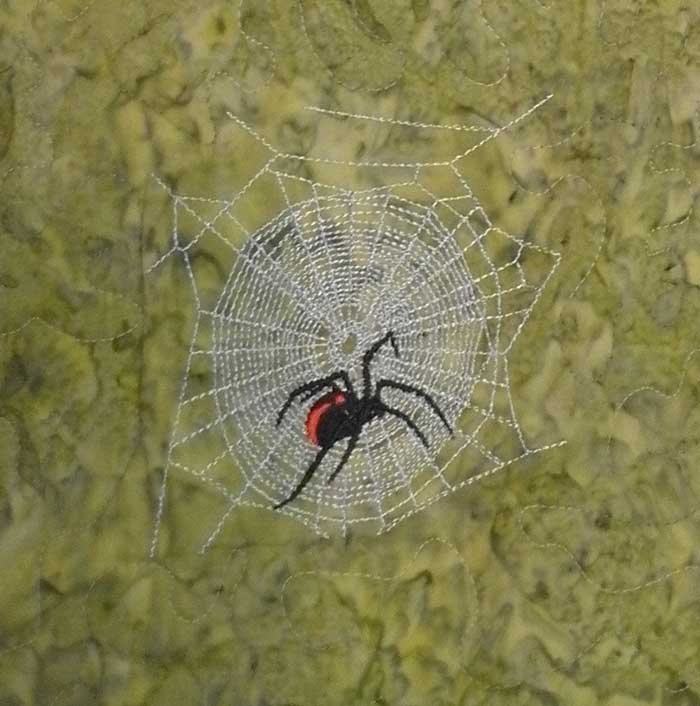
Detail of quilt: Redback spider
Rug with circular design
Rug from the recycled seams of jeans
Detail of Rug from the seams of jeans
Rug from rags
Detail from floral/geometric quilt
Detail of quilt: Dingo and black swans
Detail of quilt: Emu
Gleniffer Church window with a hint of Toona ciliata
The Gleniffer Quilt and Craft Fair 2013
The Quilt and Craft Fair was on again in the Gleniffer community Hall near the Never Never River. Here are some impressions of the works:
![]() |
| Click images to enlarge |
Images:
Crochet west, via Dorrigo?
Lichen (Usnea sp.) on fence post near the Never Never River
Detail of quilt: Redback spider
Rug with circular design
Rug from the recycled seams of jeans
Detail of Rug from the seams of jeans
Rug from rags
Detail from floral/geometric quilt
Detail of quilt: Dingo and black swans
Detail of quilt: Emu
Gleniffer Church window with a hint of Toona ciliata
The Gleniffer Quilt and Craft Fair 2013
27.8.15
Microplastic from Clothing is Accumulating on Shorelines Woldwide

60-85 percent of human-made material found on shorelines consists of micro fibers from clothing. (source)
Plastic clothing has become the norm. From lingerie to outdoor gear, synthetic garments fill shops and wardrobes, cling to bodies and households. Synthetic fabrics (polyester, acrylic, nylon, rayon, acetate, spandex, latex, etc) are convenient and just require a quick spin.
The bright, fashionable colours of the season make the textiles obsolete by the time they leave the shop. Mending is out in a throw-away society. Mountains of old rags go into 'landfill' or end up in smelly second hand shops.
Synthetic and some natural fibers are often pickled in chemicals: toxic dyes, flame retardants, nano -silver and other chemicals in stain-proof textiles and waterproof clothing.
Garments that are washed by hand or machine shed fibers and chemicals/detergents into the water. As there is a paucity of sewerage systems in rural areas like Bellingen and the mid north coast, the effluent drains into the catchment. "Wastewater from domestic washing machines demonstrated that a single garment can produce 1900 fibers per wash." (source)
The shed micro fibers reach the shorelines. They are "micron-scale synthetic fibers, mostly polyester and acrylic, in sediments along beaches the world over." (source)
The invisible contamination of soil, water catchment and marine habitat with microplastic enters the food chain of all living creatures.

Natural fibers, untreated and of organic origin produced and tailored under ethical conditions (no land grab or exploitation) is the right choice to make...
Sources:
Accumulation of Microplastic on Shorelines Woldwide: Sources and Sinks
The Damage I Cause When I Wash My Clothes
Chemicals in clothing, Choice
Two-thirds of new clothing is plastic
Updates:
What does micro plastic less than 1mm do to animals?
Linking effects of anthropogenic debris to ecological impacts
Mark Anthony Browne, A. J. Underwood, M. G. Chapman, Rob Williams, Richard C. Thompson, Jan A. van Franeker, Published 22 April 2015.DOI: 10.1098/rspb.2014.2929
Chris Wilcox, Erik Van Sebille, and Britta Denise Hardesty. Threat of plastic pollution to seabirds is global, pervasive, and increasing. PNAS, August 31, 2015 DOI: 10.1073/pnas.1502108112
( 99 per cent of the world's seabirds species will be ingesting plastic by 2050 if current marine pollution trends continue. They starve to death from plastic fibres from synthetic clothes an other 'junk food'.)
or
Almost all seabirds to have plastic in gut by 2050, CSIRO
6.8.15
A new parasite in the western long-necked turtle
Coccidiosis is commonly found in cattle where it destroys the cells of the intestinal lining.
The interest here is the concern about the Bellinger River turtles ((Emydura macquarii) which have been made extinct through a 'mystery' bug in the Bellinger river environment. The river is flanked by a bovine and livestock milieu.
400 Bellinger River turtles have been found dead or dying
Eimeria collieie n. sp. (Apicomplexa:Eimeriidae) from the western long-necked turtle (Chelodina colliei). 07.2015
Rescued turtles turn up new parasite 30.07.2015 ScienceWA
Image:
Tea towel print
Labels:
Bellingen,
Bellinger_river,
cattle,
parasites,
pathogen_ecology,
protozoa,
turtles,
WA,
water,
zoonoses
Subscribe to:
Posts (Atom)